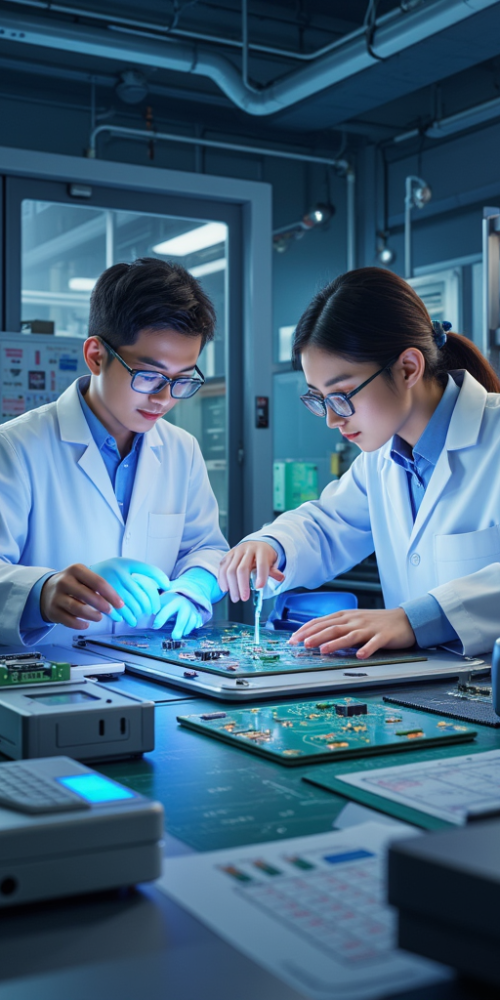
Modern electronic products—from smartphones and AI smart devices to industrial robots and medical equipment—rely on complex electronic circuits to function. At the center of these systems is the PCBA circuit board, one of the most critical components in modern electronics manufacturing.
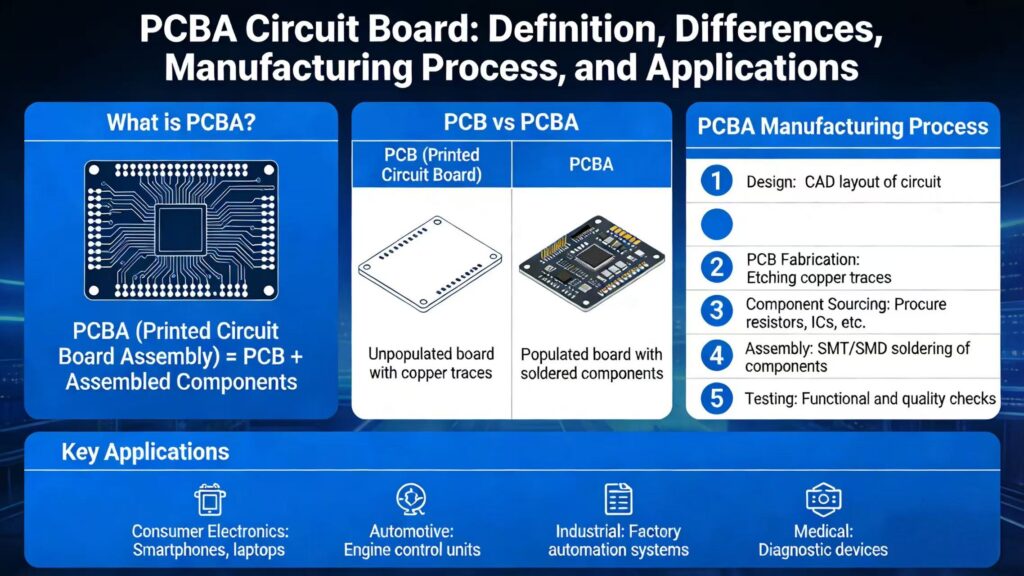
PCBA stands for Printed Circuit Board Assembly. It refers to a printed circuit board that has been fully assembled with electronic components such as resistors, capacitors, integrated circuits (ICs), and connectors, making the board fully functional. Unlike a bare PCB (Printed Circuit Board), a PCBA circuit board can perform electrical operations, transmit signals, regulate power, and control system logic.
The PCBA manufacturing process typically includes PCB design, PCB fabrication, component placement, soldering, inspection, and functional testing. Today, PCBA technology is widely used in industries such as consumer electronics, automotive systems, telecommunications, industrial automation, AI hardware, and medical devices.
As emerging technologies like AI, IoT, 5G, and smart devices continue to grow, the demand for high-quality PCBA manufacturing and assembly services is increasing rapidly worldwide.
This comprehensive guide explains:
- What PCBA circuit boards are
- The difference between PCB and PCBA
- The complete PCBA assembly process
- Key applications of PCBA technology
- How to choose a reliable PCBA manufacturer
What Is a PCBA Circuit Board?
PCBA Meaning Explained
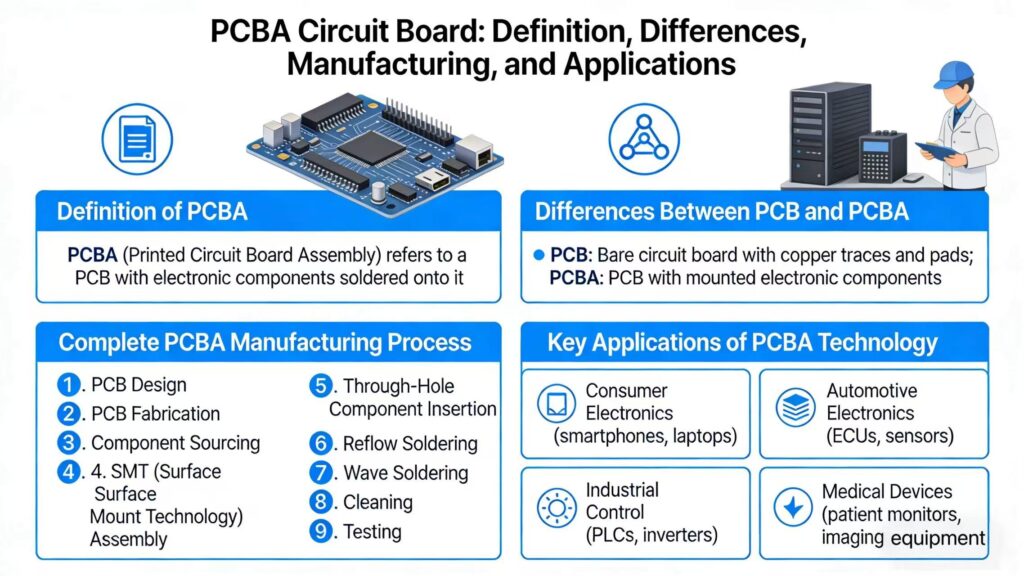
PCBA (Printed Circuit Board Assembly) refers to the process of mounting and soldering electronic components onto a printed circuit board to create a fully functional electronic circuit.
A PCBA circuit board is therefore the finished product after assembly, ready to be integrated into electronic devices.
In simple terms:
- PCB = Bare board with copper traces
- PCBA = Fully assembled and functional circuit board
Without PCBA assembly, electronic components cannot communicate or operate properly.
Key Components of a PCBA Circuit Board
A completed PCBA consists of several important elements.
1. Printed Circuit Board (PCB)
The PCB serves as the foundation of the electronic circuit.
It provides:
- Mechanical support for components
- Electrical pathways through copper traces
- Thermal management for electronic parts
Common PCB materials include:
- FR-4 fiberglass
- Aluminum PCB
- High-frequency materials
- Flexible substrates
2. Electronic Components
Electronic components perform different electrical functions within the circuit.
Typical components include:
- Microcontrollers and processors
- Integrated circuits (ICs)
- Resistors
- Capacitors
- Inductors
- Diodes
- Connectors
- Sensors
- Power management chips
These components are mounted onto the PCB during the assembly process.
3. Soldering Connections
Soldering forms the electrical and mechanical connections between components and the PCB pads.
Reliable solder joints ensure:
- Stable signal transmission
- Electrical conductivity
- Long-term durability
Modern manufacturing typically uses lead-free soldering technology to comply with environmental regulations.
The Complete PCBA Circuit Board Manufacturing Process
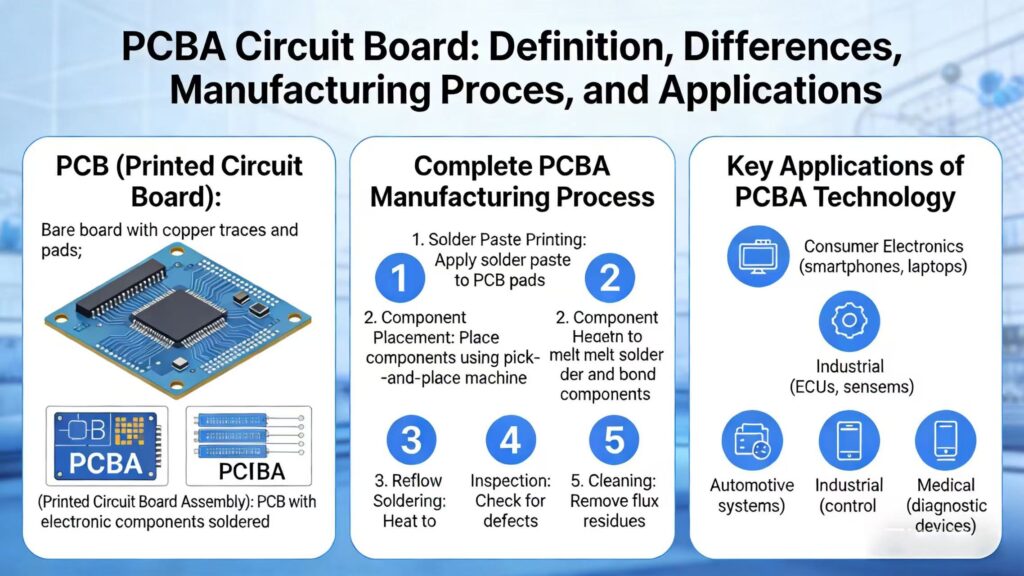
Producing a high-quality PCBA circuit board requires several precise steps.
Step 1: PCB Design
The process begins with electronic circuit design.
Engineers create:
- Circuit schematics
- PCB layouts
- Component placement plans
- Signal routing paths
Professional design software includes:
- Altium Designer
- Eagle PCB
- KiCad
A well-designed PCB ensures:
- Stable signal transmission
- Good thermal performance
- Efficient manufacturing
Step 2: PCB Fabrication
After design approval, the PCB board is manufactured.
Key fabrication steps include:
- Copper layer etching
- Layer lamination
- Drilling holes and vias
- Surface finishing
Common surface finishes include:
- HASL (Hot Air Solder Leveling)
- ENIG (Electroless Nickel Immersion Gold)
- OSP (Organic Solderability Preservative)
The result is a bare PCB ready for component assembly.
Step 3: Component Placement
Electronic components are placed on the board using automated pick-and-place machines.
Modern SMT machines can place tens of thousands of components per hour with extremely high precision.
Advantages of automated placement include:
- High speed production
- Reduced human error
- Improved consistency
Step 4: Soldering Process
Once components are placed, the board goes through soldering.
Reflow Soldering (SMT)
This method is used for surface-mounted components.
Process steps include:
- Apply solder paste to PCB pads
- Place components
- Pass board through a reflow oven
- Solder melts and forms connections
Wave Soldering (Through-Hole)
Through-hole components are soldered using molten solder waves.
This technique ensures strong mechanical connections.
Step 5: Inspection and Testing
Quality control is critical in PCBA manufacturing.
Common testing methods include:
- AOI (Automated Optical Inspection)
- X-Ray inspection
- ICT (In-Circuit Testing)
- Functional Testing (FCT)
These tests ensure the circuit board works correctly before delivery.
Types of PCBA Assembly Technologies
Surface Mount Technology (SMT)
SMT is the most widely used PCBA assembly technology today.
Advantages include:
- High component density
- Smaller electronic devices
- Faster automated production
SMT is commonly used in:
- Smartphones
- Laptops
- IoT devices
- wearable electronics
Through-Hole Technology (THT)
THT involves inserting component leads through drilled holes in the PCB.
It provides stronger mechanical support and is used for:
- Power components
- Connectors
- Transformers
Hybrid Assembly
Many modern electronics combine SMT and THT technologies.
Hybrid assembly improves both performance and reliability.
Why PCBA Circuit Boards Are Essential in Electronics
PCBA technology forms the backbone of modern electronic systems.
Enables Compact Electronic Design
Advanced PCBA technology allows manufacturers to integrate many functions into small devices.
This is critical for:
- Wearable technology
- Smart home devices
- portable electronics
Provides Reliable Electrical Performance
Professional PCBA assembly ensures:
- Stable connections
- Strong solder joints
- Reduced electrical failures
This improves product reliability.
Supports Large-Scale Manufacturing
Automated SMT production allows manufacturers to produce thousands of boards efficiently, reducing production costs.
Applications of PCBA Circuit Boards
PCBA circuit boards are used across many industries.
Consumer Electronics
Examples include:
- Smartphones
- Laptops
- Tablets
- Smart home devices
- Wearables
Automotive Electronics
Modern vehicles rely heavily on electronic control systems.
PCBA applications include:
- Electronic Control Units (ECU)
- Infotainment systems
- ADAS driver assistance systems
- Battery management systems
Medical Devices
Medical electronics require highly reliable PCBA assembly.
Applications include:
- Diagnostic equipment
- Patient monitoring devices
- wearable health trackers
- portable medical instruments
Industrial Automation
Industrial systems depend on PCBAs for automation and control.
Examples include:
- robotics controllers
- industrial sensors
- PLC systems
- factory automation equipment
Telecommunications
Communication infrastructure relies on advanced PCBAs.
Applications include:
- routers
- network switches
- 5G base stations
- fiber communication equipment
PCB vs PCBA: What Is the Difference?
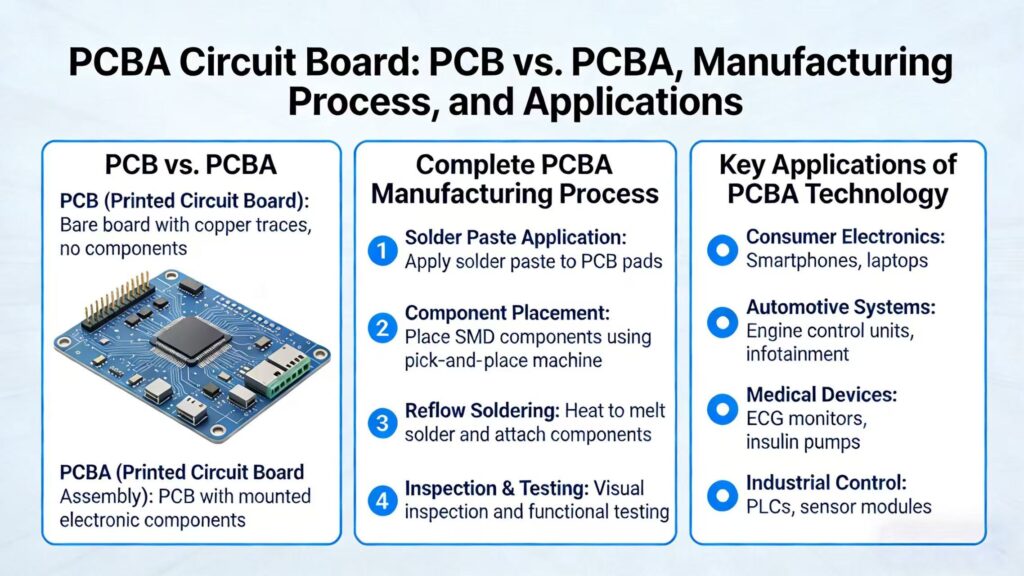
Understanding the difference between PCB and PCBA is important in electronics manufacturing.
| Feature | PCB | PCBA |
|---|---|---|
| Definition | Bare printed circuit board | Fully assembled circuit board |
| Components | No components | Components installed |
| Function | Not functional | Fully operational |
| Manufacturing stage | Early stage | Final product |
| Application | Used for assembly | Used in electronic devices |
In simple terms:
PCB = Empty circuit board
PCBA = Completed electronic circuit
Companies that develop electronic products typically require PCBA assembly services, not just PCB fabrication.
How to Choose a Reliable PCBA Manufacturer
Selecting the right PCBA manufacturer is essential for product quality and business success.
1. Certifications and Quality Standards
Reliable suppliers should comply with industry standards such as:
- ISO 9001
- ISO 13485 (medical electronics)
- IATF 16949 (automotive)
2. Engineering and Design Capabilities
A strong manufacturer should provide:
- PCB design support
- DFM (Design for Manufacturability) analysis
- prototyping services
3. Advanced Assembly Equipment
Modern production lines should include:
- SMT assembly lines
- automated pick-and-place machines
- reflow ovens
- AOI inspection systems
4. Testing and Quality Assurance
Look for manufacturers that offer comprehensive testing, including:
- functional testing
- X-ray inspection
- reliability testing
Yuxun Electronics: Advanced PCBA Manufacturing Solutions
For companies developing smart hardware products, partnering with an experienced PCBA manufacturer is crucial.
Yuxun Electronics specializes in integrated PCB design, PCBA assembly, and intelligent hardware development. With more than 20 years of experience in electronic product design and manufacturing, the company has developed advanced capabilities in:
- SMT and THT PCB assembly
- AI smart hardware development
- intelligent toy electronics
- customized electronic modules
- OEM and ODM product manufacturing
Yuxun combines advanced SMT production lines, experienced engineering teams, and strict quality control systems to provide reliable PCBA manufacturing solutions for global customers.
The company focuses on high-end intelligent products and AI-powered electronic devices, helping clients transform innovative ideas into market-ready products.
Future Trends in PCBA Circuit Boards (2026 and Beyond)
The PCBA industry continues to evolve with new technologies.
Miniaturization
Electronic devices are becoming smaller while requiring higher performance.
This drives demand for:
- HDI PCB technology
- micro-components
- high-density assembly
AI-Driven Manufacturing
AI is increasingly used in smart factories for:
- defect detection
- predictive maintenance
- automated quality inspection
Flexible and Wearable Electronics
Flexible PCBs are enabling innovation in:
- wearable devices
- medical sensors
- smart clothing
Green Manufacturing
Environmental regulations are pushing manufacturers toward:
- lead-free solder
- eco-friendly materials
- energy-efficient production processes
5G and IoT Expansion
The rapid growth of 5G networks and IoT devices is increasing demand for high-speed and high-frequency PCB assemblies.
Conclusion
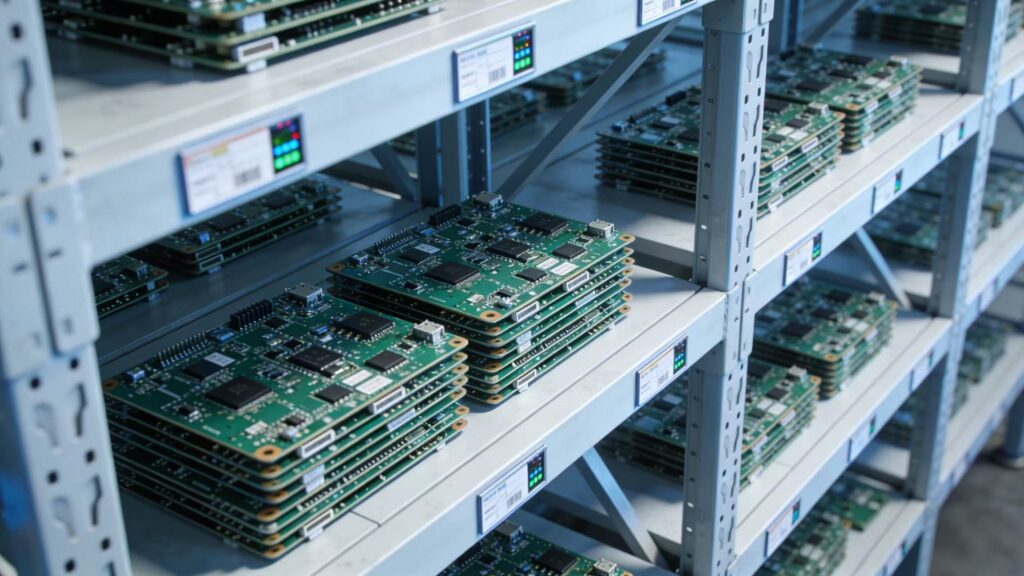
PCBA circuit boards are the core of modern electronic systems, enabling electronic devices to operate reliably and efficiently. By transforming a bare PCB into a functional electronic module, PCBA assembly makes it possible for complex electronic products to exist.
From consumer electronics and medical equipment to industrial automation and telecommunications, PCBA technology plays an essential role in nearly every modern industry.
As emerging technologies such as AI, IoT, and 5G continue to expand, the demand for high-quality PCBA manufacturing and custom electronic solutions will only grow.
Partnering with an experienced PCBA manufacturer like Yuxun Electronics ensures reliable product development, faster time-to-market, and high-performance electronic systems.
Frequently Asked Questions (FAQ)
1. What does PCBA stand for?
PCBA stands for Printed Circuit Board Assembly, which refers to a printed circuit board that has been assembled with electronic components and soldered to create a fully functional electronic circuit.
2. What is the difference between PCB and PCBA?
A PCB is a bare circuit board without components, while a PCBA is the completed board with electronic components installed and soldered, allowing it to perform electrical functions.
3. What industries use PCBA circuit boards?
PCBA circuit boards are widely used in industries such as consumer electronics, automotive electronics, medical devices, industrial automation, and telecommunications.
4. What are the main PCBA assembly technologies?
The main PCBA assembly technologies include:
- Surface Mount Technology (SMT)
- Through-Hole Technology (THT)
- Hybrid assembly combining SMT and THT
5. How long does PCBA manufacturing take?
The production time depends on order quantity and complexity:
- Prototype production: 3–7 days
- Small batch production: 1–2 weeks
- Mass production: 2–4 weeks
6. Why is PCBA important for electronic devices?
PCBA provides the electrical connections and circuit functionality required for electronic devices to operate, making it one of the most essential elements in modern electronics manufacturing.