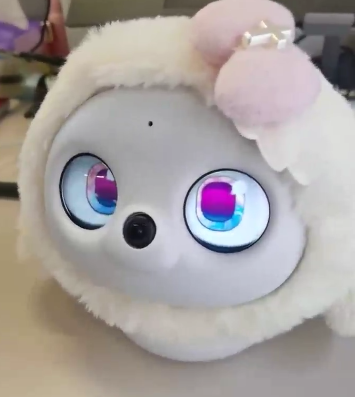
Modern smart devices are becoming increasingly complex. Products such as smart ring charging cases, AI live-streaming boxes, smart speakers, and wearable devices integrate multiple technologies into a compact design.
A typical smart device PCB may include:
- Power management systems (battery charging and protection)
- MCU control units
- AI voice modules
- Camera modules
- Multiple sensor interfaces
- Wireless communication modules (Bluetooth/WiFi)
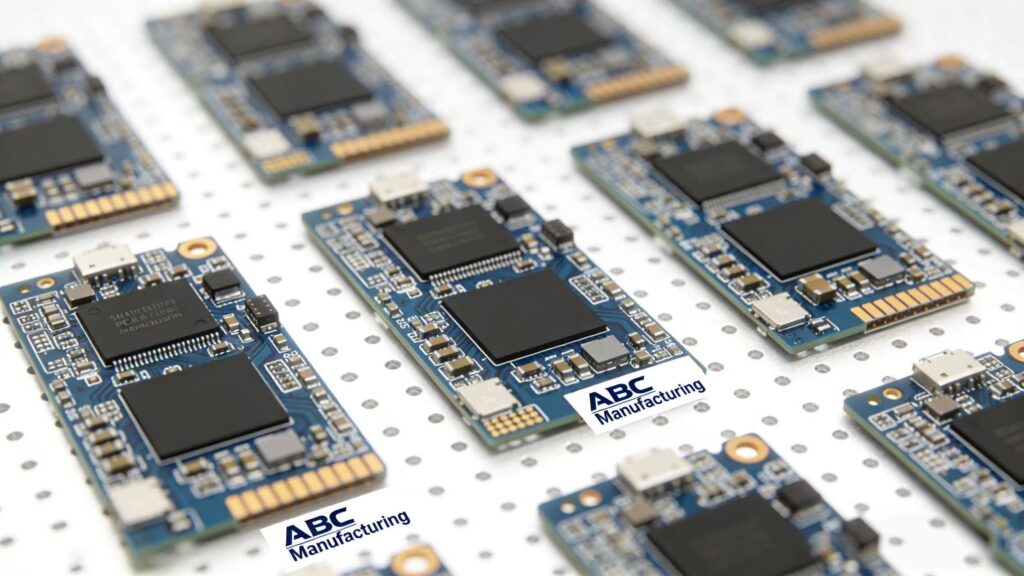
For hardware engineers and product managers, designing a circuit is only half of the challenge. The real question is whether the design can be manufactured efficiently, reliably, and at scale.
This is where a Custom PCB Board Manufacturer with Turnkey PCBA Assembly Service becomes essential.
A professional manufacturer provides:
- PCB fabrication
- component sourcing
- SMT assembly
- DFM engineering review
- rapid prototyping
- mass production support
This article provides a step-by-step roadmap for custom PCBA manufacturing, explaining how to prepare design files, optimize procurement strategies, pass DFM review, and move from prototype to large-scale production.
Companies like YUXUN, a professional turnkey PCB manufacturing and PCBA assembly service provider, specialize in helping hardware startups and product teams transform innovative ideas into reliable electronic products.
Step 1: Finalizing PCB Design and Manufacturing Files
The first step in working with a custom PCB board manufacturer is preparing the correct engineering files. These files ensure smooth communication between the design team and the factory.
Incomplete or inaccurate files often cause production delays, assembly errors, or additional engineering costs.
The three most important files include:
- Gerber files
- BOM (Bill of Materials)
- CPL (Pick and Place File)
Gerber Files: The Blueprint of PCB Manufacturing
Gerber files are the standard format used to describe PCB manufacturing layers.
They define the physical layout of the circuit board, including:
- copper layers
- solder mask layers
- silkscreen markings
- drill hole positions
- board outline
For complex devices like AI live streaming boxes or smart charging cases, the Gerber file ensures that the PCB manufacturer accurately reproduces the electrical and mechanical design.
Typical Gerber layers include:
- Top copper layer
- Bottom copper layer
- Solder mask layer
- Silkscreen layer
- Drill file
- Board outline file
Professional PCB fabrication and assembly companies like YUXUN will perform a pre-production engineering check to ensure that Gerber files meet manufacturing requirements.
BOM: Accurate Component Identification
The Bill of Materials (BOM) lists all electronic components required for PCB assembly.
Each item in the BOM should include:
- component name
- manufacturer part number (MPN)
- package type
- quantity
- alternative parts (if available)
Accurate BOM preparation is especially important for products involving:
- AI voice modules
- DC motor drivers
- camera modules
- battery charging ICs
If the component model number is incorrect, the PCB assembly line may stop production.
A reliable turnkey PCB manufacturing partner like YUXUN can also help optimize BOM selection and recommend cost-effective alternatives with stable supply chains.
CPL File: Precision Placement for SMT Assembly
The CPL file (Component Placement List)—also called the Pick-and-Place file—provides the exact coordinates where components must be mounted.
It contains information such as:
- X/Y component location
- rotation angle
- component reference designator
- board side (top or bottom)
This file is essential for automated SMT assembly machines.
For high-precision components like:
- camera sensors
- AI chips
- Bluetooth modules
- RF components
even a small placement error can affect device performance.
Professional PCBA assembly service providers rely on CPL files to ensure high-speed automated placement accuracy.
Step 2: Choosing a Component Procurement Strategy
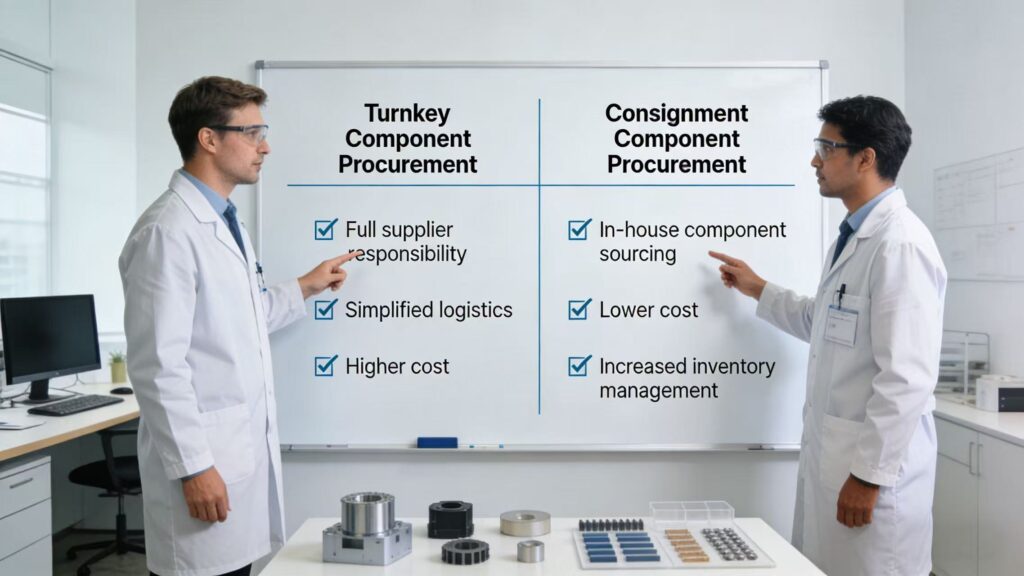
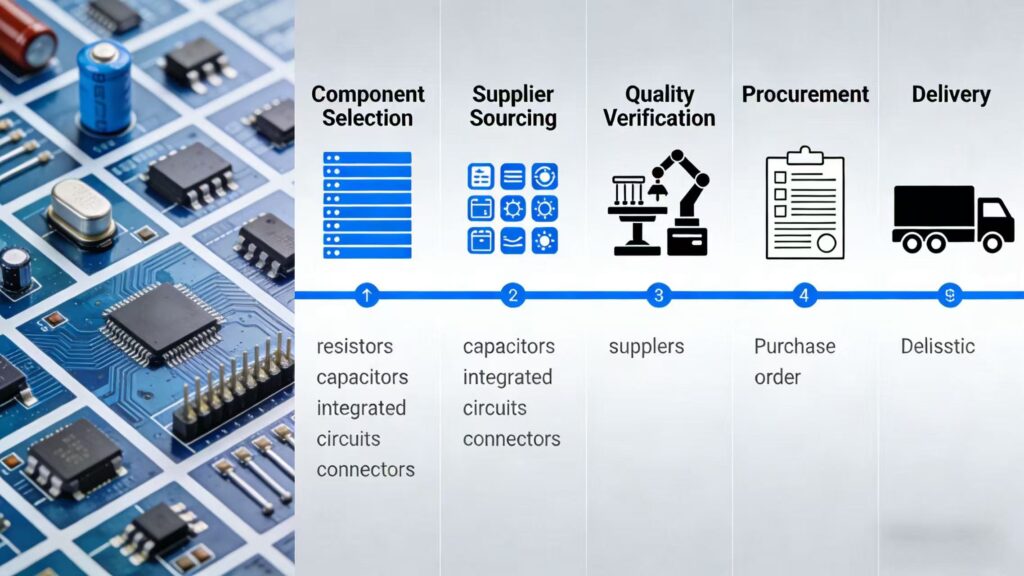
Component sourcing is a critical step in turnkey PCB assembly manufacturing.
There are two main procurement models:
1. Turnkey PCB Manufacturing
In the turnkey model, the PCB manufacturer handles:
- component sourcing
- supply chain management
- logistics
- inventory control
This model is ideal for high-integration smart products, such as:
- smart ring charging boxes
- AI voice assistants
- wearable electronics
- IoT devices
Advantages include:
- simplified supply chain
- faster production
- reduced procurement workload
- lower logistics complexity
Companies like YUXUN provide full turnkey PCBA services, helping customers reduce development time and minimize supply chain risks.
2. Consignment (Customer-Supplied Components)
In this model, the client provides some or all components.
This approach is usually used when:
- components are proprietary
- chips are pre-purchased
- parts are highly customized
However, consignment requires careful logistics coordination, which can increase lead time.
Most hardware startups prefer turnkey PCB assembly services for efficiency.
Step 3: DFM Review — Prevent Manufacturing Problems
Design for Manufacturability (DFM) is one of the most important stages before PCB production.
DFM analysis ensures that a PCB design can be manufactured reliably and economically.
During DFM review, engineers check:
- trace width
- pad design
- via placement
- thermal management
- component spacing
- soldering feasibility
Without DFM analysis, even a perfectly designed circuit may fail during production.
Thermal Design for LED and High-Power Circuits
Devices containing LED lighting systems or power regulators generate significant heat.
DFM recommendations often include:
- wider copper traces
- thermal vias
- improved copper planes
- better heat dissipation layout
These improvements increase product reliability and lifespan.
High Current Design for Motor Drivers
Products using DC motors—such as smart devices with mechanical components—require special PCB considerations.
Key design improvements include:
- thicker copper layers
- wider current paths
- reinforced power pads
- optimized ground planes
Experienced engineering teams like YUXUN’s PCB design support team assist clients in optimizing layouts before production begins.
Step 4: PCB Manufacturing and SMT Assembly Process
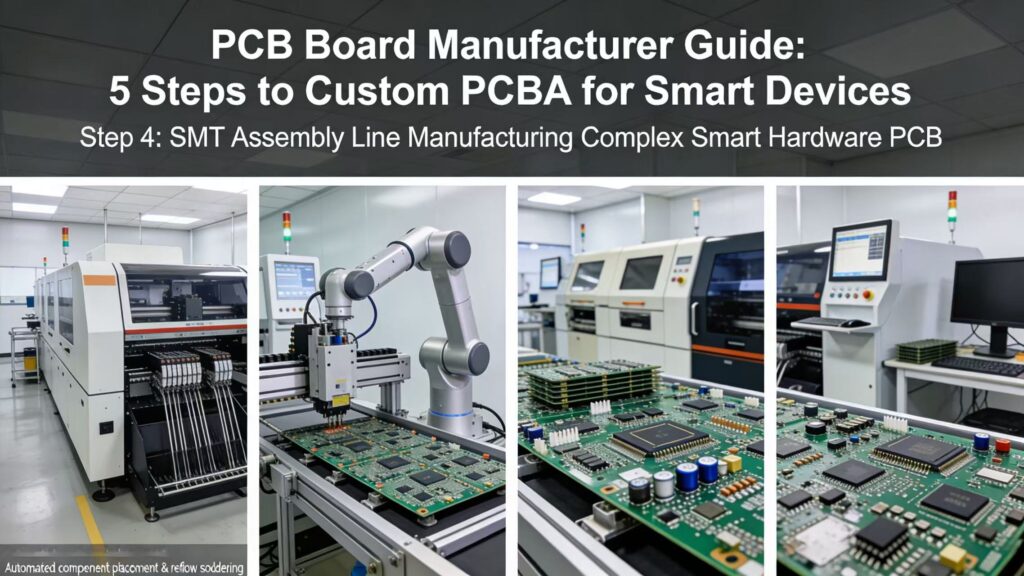
After design verification and DFM approval, the PCB enters the manufacturing and assembly stage.
The standard SMT assembly process includes:
- Solder paste printing
- Automatic component placement
- Reflow soldering
- AOI optical inspection
- functional testing
SMT Assembly for Complex Smart Hardware
Products such as AI live streaming boxes often include:
- multiple USB interfaces
- audio input/output
- camera connections
- wireless modules
- memory chips
These complex PCB designs require high-precision automated SMT equipment.
Professional PCB board manufacturers like YUXUN utilize:
- high-speed pick-and-place machines
- automated optical inspection systems
- advanced reflow ovens
These technologies ensure consistent soldering quality and high production yield.
Step 5: Testing, Validation, and Mass Production
After PCB fabrication and SMT assembly are completed, the final and equally critical stage is testing, validation, and preparation for mass production.
This step ensures that the assembled PCBA functions correctly and meets the reliability requirements of modern smart devices.
For complex electronics such as AI live streaming boxes, smart charging cases, or IoT devices, thorough testing is essential before entering large-scale production.
Professional PCB board manufacturers like YUXUN implement multiple quality control procedures to ensure stable performance and long-term reliability.
Functional Testing (FCT)
Functional testing verifies that the assembled PCB operates exactly as designed.
Typical tests include:
- power-on verification
- voltage and current measurement
- MCU firmware testing
- sensor communication verification
- AI voice module functionality testing
For example, in a smart ring charging case, engineers test:
- battery charging management
- USB power output
- Bluetooth communication
- LED indicators
Functional testing ensures that the hardware and firmware work together properly.
Automated Optical Inspection (AOI)
AOI systems use high-resolution cameras to inspect PCB assemblies for defects.
Common inspection items include:
- solder bridge detection
- missing components
- polarity errors
- solder joint quality
This automated inspection process significantly improves manufacturing consistency and product reliability.
High-end PCBA factories like YUXUN integrate AOI inspection throughout the SMT production line to reduce defect rates.
Reliability and Burn-in Testing
For consumer electronics and smart devices, reliability testing is essential.
Typical reliability tests include:
- temperature cycling tests
- burn-in testing
- vibration testing
- power stability tests
These tests help identify potential failures before the product reaches the market.
Preparing for Mass Production
Once testing and validation are complete, the project moves into mass production.
At this stage, the manufacturer will optimize:
- production line efficiency
- component supply chain stability
- assembly yield rate
- packaging and logistics
A professional turnkey PCB manufacturing partner will also assist customers in scaling production from prototype batches to thousands or millions of units.
With extensive experience in custom electronics manufacturing and PCBA assembly, YUXUN provides complete production support, including:
- rapid PCB prototyping
- pilot batch production
- volume manufacturing
- quality control management
This ensures that innovative smart hardware products can move quickly and reliably from engineering prototypes to global market distribution.
Conclusion: Engineering Support Is the Key to Successful Hardware Manufacturing
Launching a successful smart hardware product requires more than just a good design.
It requires a reliable manufacturing partner that understands both engineering and production.
A professional custom PCB board manufacturer provides:
- DFM engineering support
- turnkey PCB manufacturing
- rapid prototyping PCB services
- component sourcing
- SMT assembly and testing
With extensive experience in custom electronics development and PCB assembly, YUXUN helps hardware startups and product teams transform innovative ideas into scalable products.
From prototype development to large-scale production, YUXUN provides complete PCBA manufacturing solutions tailored to smart devices, AI electronics, IoT products, and consumer hardware.
Choosing the right manufacturing partner can cut development time, reduce risk, and accelerate product launch.
FAQ: Custom PCB Board Manufacturing
1. What does a PCB board manufacturer do?
A PCB board manufacturer produces printed circuit boards and often provides PCB assembly services, including component sourcing, SMT assembly, testing, and mass production.
Turnkey manufacturers like YUXUN offer end-to-end PCBA solutions, simplifying hardware production.
2. What files are required for PCB assembly?
Most PCB assembly manufacturers require:
- Gerber files
- BOM (Bill of Materials)
- CPL / Pick-and-Place file
- PCB stack-up information
These files ensure accurate manufacturing and component placement.
3. What is turnkey PCB manufacturing?
Turnkey PCB manufacturing means the supplier manages the entire production process, including:
- PCB fabrication
- component procurement
- SMT assembly
- testing and quality control
This model significantly reduces supply chain complexity.
4. What is rapid PCB prototyping?
Rapid PCB prototyping allows engineers to quickly produce small batches of PCB assemblies to test functionality before mass production.
It shortens the product development cycle and reduces design risks.
5. Why is DFM important in PCB design?
DFM (Design for Manufacturability) ensures that a PCB design can be efficiently produced without errors or yield loss.
A DFM review identifies problems early and improves manufacturing reliability.