
In modern electronics, products such as LED lighting systems, camera modules, and MEMS microphones may appear similar from the outside. However, the internal PCB design principles behind these devices are fundamentally different.
A LED lighting board must prioritize thermal management to maintain stable performance.
A camera module PCB focuses on signal integrity and miniaturization for high-quality image transmission.
A microphone PCB requires low-noise design and electromagnetic shielding to ensure accurate audio capture.
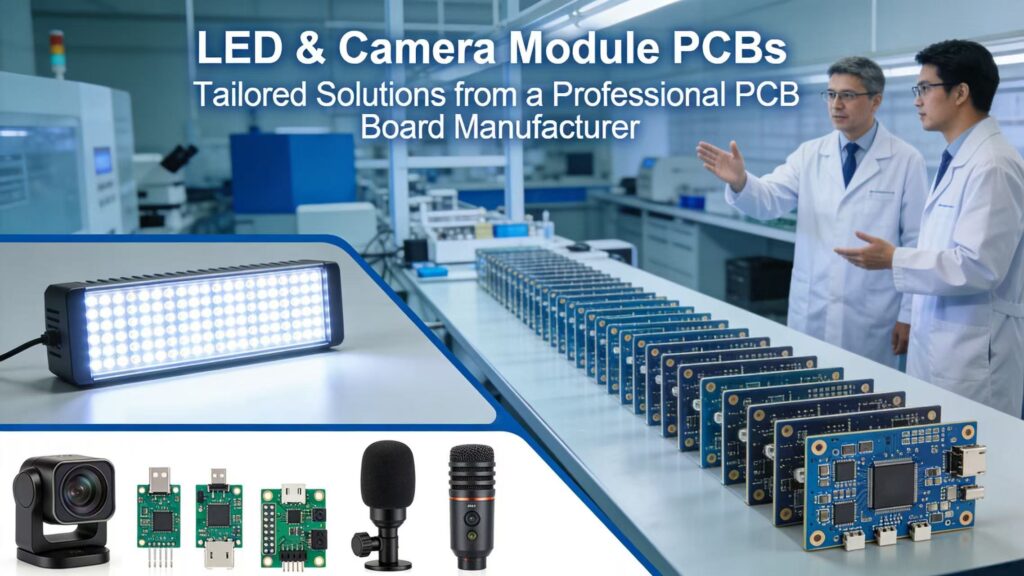
For this reason, working with a professional PCB board manufacturer is essential. Manufacturers must understand materials, circuit architecture, thermal behavior, and signal transmission characteristics across different industries.
In this article, we will explore how a specialized PCB manufacturer provides tailored solutions for LED PCBs, camera module PCBs, and microphone PCBs, including material selection such as aluminum PCB and FR4 PCB, structural design like multilayer PCB and rigid-flex PCB, and application-specific optimization.
These insights help engineers, product managers, and hardware startups design high-performance consumer electronics PCBs while improving product reliability and lifespan.
LED Products: Thermal Management Is the First Priority
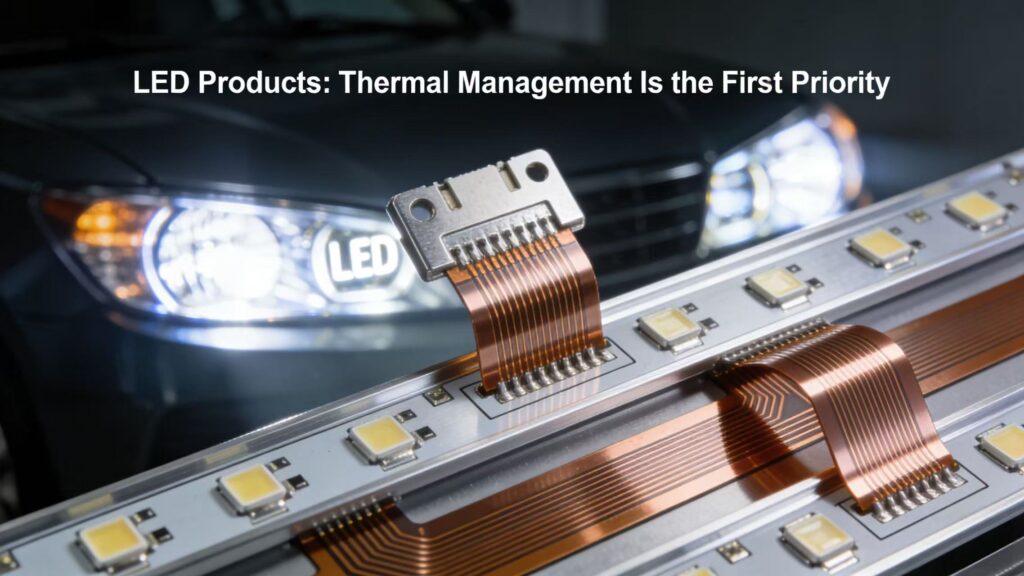
Why High-Power LEDs Almost Always Use Aluminum PCBs
In high-power lighting applications, heat is the primary factor that affects LED lifespan and efficiency. Excess heat can cause lumen degradation, color shift, and shortened product lifetime.
Therefore, many high-power LED products rely on Aluminum PCBs, also known as Metal Core Printed Circuit Boards (MCPCB).
Structure of an Aluminum PCB
A typical MCPCB LED board consists of three layers:
- Copper circuit layer
- Thermally conductive dielectric layer
- Aluminum metal base
The aluminum substrate provides excellent thermal conductivity, typically 3–8 W/mK, which is significantly higher than standard FR4 PCB materials.
This allows heat generated by LEDs to quickly dissipate through the metal core, preventing overheating and improving system stability.
Key Advantages of Aluminum LED PCBs
• Superior heat dissipation
• Improved LED lifespan
• Better thermal reliability
• Reduced need for external heat sinks
• Stable performance under high current conditions
These advantages make aluminum PCB board manufacturers essential partners in industries such as:
- automotive LED lighting
- industrial lighting systems
- plant grow lights
- outdoor LED street lights
- architectural lighting
LED PCB Market Growth in Emerging Applications
The global LED PCB market continues to expand as new lighting technologies emerge.
Key growth sectors include:
Automotive LED Lighting
Modern vehicles use LEDs in:
- headlights
- daytime running lights
- interior ambient lighting
- adaptive lighting systems
These systems require high-reliability LED PCBs capable of operating under high temperature and vibration conditions.
Plant Growth Lighting
The agriculture technology industry increasingly uses LED grow lights to optimize plant photosynthesis.
These systems require:
- high power density
- stable thermal management
- long operating cycles
A professional LED PCB board manufacturer must therefore design high-current LED PCBs with optimized copper thickness and thermal paths.
LED PCB Layout Techniques for Heat Distribution
Thermal performance is not determined by material alone. PCB layout design also plays a critical role.
Common LED PCB design strategies include:
Thermal Via Design
Thermal vias transfer heat from the LED solder pad to the metal core layer, improving heat dissipation efficiency.
Even Component Distribution
LED chips should be distributed symmetrically across the PCB to prevent localized overheating.
Thick Copper Layers
High-power LED boards often use 2 oz to 4 oz copper thickness to handle high current flow.
Wide Copper Traces
Wider traces reduce electrical resistance and heat generation.
A professional LED PCB manufacturer combines material science and layout engineering to achieve optimal thermal performance.
Camera Module PCBs: Balancing Signal Integrity and Miniaturization
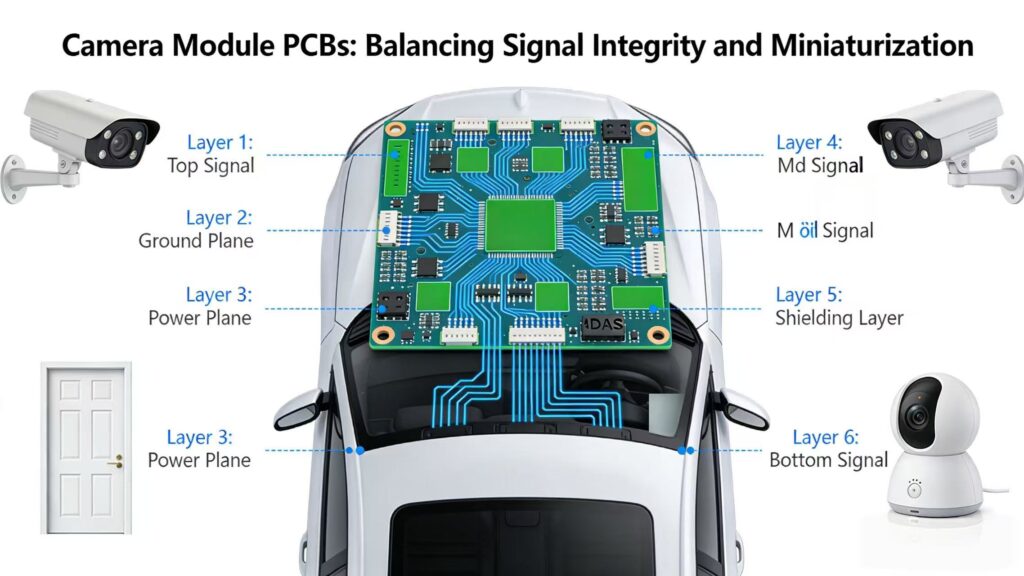
The Special Requirements of Camera Module PCBs
Unlike LED boards, camera module PCBs must prioritize signal integrity and noise control.
Camera sensors transmit high-speed digital image signals, which are highly sensitive to interference. Poor PCB design can lead to:
- image noise
- signal distortion
- frame drops
- unstable video output
Therefore, camera PCB design requires high-frequency PCB engineering techniques.
Multilayer PCB Design for Image Signal Isolation
Modern camera modules typically use 4-layer or 6-layer PCBs to separate signal paths.
A typical camera PCB stack-up might include:
Layer 1 – Signal layer
Layer 2 – Ground plane
Layer 3 – Power plane
Layer 4 – High-speed signal layer
This configuration provides:
- stable signal reference
- reduced EMI interference
- improved signal integrity
A professional camera module PCB manufacturer carefully designs trace impedance, differential pairs, and ground shielding to maintain clean image signals.
Applications of Camera Module PCBs
Camera module PCBs are widely used in:
Security Cameras
Modern surveillance systems require high-resolution video sensors and reliable PCBs to ensure 24/7 operation.
Automotive ADAS Cameras
Advanced Driver Assistance Systems (ADAS) use multiple cameras for:
- lane detection
- collision avoidance
- parking assistance
These applications require automotive-grade camera PCBs with high reliability and vibration resistance.
Smart Devices and IoT Cameras
Camera PCBs are also used in:
- smart doorbells
- smart home cameras
- AI vision systems
- wearable cameras
These devices demand ultra-compact PCBs with high-density interconnect technology (HDI).
Microphone and Audio PCBs: The Art of Noise Shielding

MEMS Microphones and ASIC Integration
Modern microphone PCBs have evolved significantly with the adoption of MEMS microphone chips.
MEMS microphones often integrate:
- MEMS sensor
- analog front-end
- ASIC signal processor
This integration requires precise PCB layout and signal isolation to ensure accurate sound capture.
Circular PCB Layout for Microphone Modules
Many microphone PCBs use circular designs to fit compact consumer electronics devices such as:
- smart speakers
- wireless earbuds
- AI voice assistants
- conference systems
Circular layouts also allow symmetrical signal routing, which helps maintain balanced audio performance.
Differential Routing for Low Noise
Audio signals are extremely sensitive to electromagnetic interference.
Professional audio PCB design often uses:
- differential signal routing
- ground shielding layers
- separated analog and digital areas
These techniques reduce noise and distortion, improving audio clarity.
Audio PCB Design in Live Streaming Devices
In products such as live streaming boxes and audio capture systems, PCB designers must carefully separate the audio codec area from other digital circuits.
Key design techniques include:
- independent audio ground plane
- shielding structures
- analog signal isolation
This ensures high-quality sound capture for broadcasting and streaming applications.
Why Choose a Professional PCB Board Manufacturer
Different applications require completely different PCB engineering approaches.
A reliable PCB board manufacturer must understand three key factors:
1. Material Expertise
Selecting the correct substrate:
- Aluminum PCB for thermal management
- FR4 PCB for general electronics
- Flexible PCB for compact designs
2. Manufacturing Capability
Advanced capabilities include:
- multilayer PCB fabrication
- HDI microvia drilling
- rigid-flex PCB manufacturing
- high-precision SMT assembly
3. Application Knowledge
Understanding industry requirements for:
- LED lighting PCBs
- camera module PCBs
- microphone PCBs
- consumer electronics PCBs
YUXUN: Your Trusted Partner for Custom PCB Manufacturing
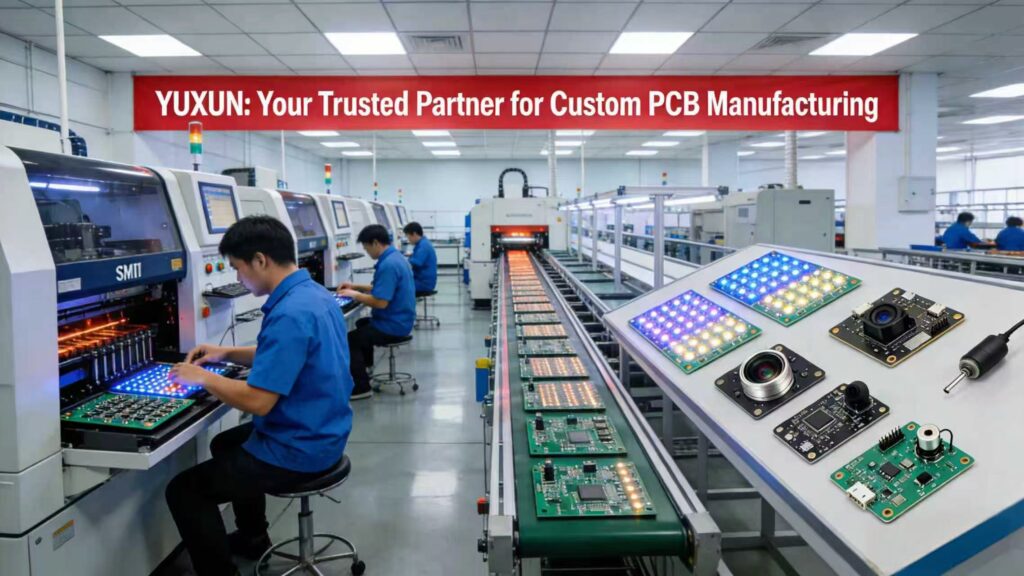
At YUXUN, we specialize in custom PCB design and PCBA manufacturing for consumer electronics and intelligent hardware products.
Our engineering team provides end-to-end solutions, including:
- LED aluminum PCB manufacturing
- camera module PCB design
- microphone and audio PCB development
- multilayer high-density PCB fabrication
- turnkey PCB assembly services
With extensive experience in camera modules, AI devices, lighting systems, and smart electronics, YUXUN delivers high-reliability PCBs tailored to each application scenario.
By combining advanced materials, precision manufacturing, and deep application expertise, we help global clients accelerate product innovation and market success.
Conclusion
Although LED lights, camera modules, and microphones are common electronic products, their PCB design principles differ dramatically.
LED boards require thermal optimization, camera PCBs demand signal integrity, and audio PCBs focus on noise shielding.
A professional PCB board manufacturer must therefore master the integration of materials, manufacturing processes, and application knowledge.
Companies like YUXUN combine custom engineering expertise with advanced PCB fabrication technologies, enabling clients to develop reliable and high-performance electronics across industries such as smart devices, security systems, automotive electronics, and professional audio equipment.
FAQ
1. What is an LED PCB and why is aluminum used?
An LED PCB is a circuit board designed specifically for LED lighting systems. Aluminum is commonly used because it provides excellent thermal conductivity, allowing heat generated by LEDs to dissipate efficiently and extend product lifespan.
2. What materials are used in camera module PCBs?
Camera module PCBs are typically made from FR4 multilayer boards, HDI PCBs, or rigid-flex PCBs. These materials support high-speed signal transmission and compact design.
3. How many layers does a typical camera module PCB have?
Most camera module PCBs use 4-layer or 6-layer designs to isolate high-speed image signals from power and control circuits.
4. Why is noise shielding important in microphone PCBs?
Microphone circuits handle extremely small analog signals. Without proper shielding and differential routing, electromagnetic interference can introduce noise and degrade audio quality.
5. What industries require custom PCB manufacturing?
Custom PCBs are widely used in:
- LED lighting systems
- security cameras
- automotive electronics
- IoT devices
- smart home products
- industrial automation