The electronics industry is evolving rapidly. Devices are becoming smaller, smarter, and more connected. At the center of this transformation lies PCBA circuit board technology, which acts as the core infrastructure of modern electronic products.
From smartphones and AI devices to medical equipment and smart homes, printed circuit board assemblies (PCBAs) are responsible for integrating components, managing electrical signals, and ensuring product reliability.
Today, manufacturers and product developers are focusing on several key technological shifts that will define the next generation of electronics:
- Miniaturization and high-density circuit design
- Advanced materials for performance and thermal stability
- AI-driven automated manufacturing
- Flexible and printed electronics
- Sustainable and environmentally friendly PCBA production
These innovations are not only improving performance but also reducing costs, enhancing manufacturing efficiency, and enabling entirely new product categories.
For companies developing next-generation electronics, understanding these trends is essential for staying competitive in the global market.
As a professional PCBA solution provider, YUXUN continuously invests in advanced manufacturing technologies, engineering capabilities, and customized PCBA development to support customers worldwide in building smarter electronic products.
1. Miniaturization and Advanced Materials
The Push Toward Smaller Electronics
One of the most significant trends in PCBA circuit board technology is miniaturization. Consumers demand smaller and lighter electronic devices without sacrificing performance.
This has driven the adoption of high-density interconnect (HDI) PCB technology, which allows manufacturers to place more components in smaller spaces.
Common examples include:
- Smart wearables
- AI smart speakers
- IoT sensors
- portable medical devices
- smart home controllers
Miniaturization enables these devices to integrate more functions while maintaining compact designs.
Key technologies enabling miniaturization
1. HDI PCB technology
HDI PCBs use:
- microvias
- blind vias
- buried vias
- fine trace routing
These features allow for higher component density and improved signal integrity.
2. Advanced semiconductor packaging
Technologies like:
- System in Package (SiP)
- Ball Grid Array (BGA)
- Chip Scale Package (CSP)
help reduce component size while improving performance.
3. Advanced PCB materials
New materials improve heat resistance, signal speed, and mechanical strength.
Examples include:
- High-frequency laminates
- Ceramic substrates
- Polyimide materials
- Low-loss dielectric materials
These materials are essential for high-performance applications such as 5G devices, AI hardware, and automotive electronics.
At YUXUN, engineering teams work closely with customers to optimize PCB layout, component selection, and thermal design, ensuring compact yet reliable PCBA solutions.
2. Automation and AI Integration in PCBA Manufacturing
Smart Factories Are Transforming Electronics Production
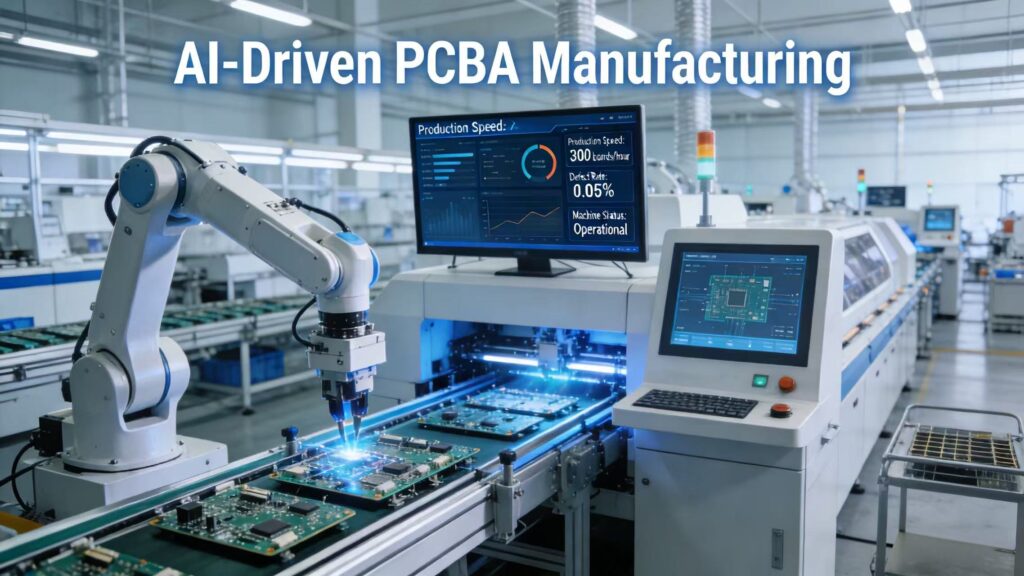
The adoption of automation and artificial intelligence (AI) is revolutionizing the PCBA manufacturing process.
Traditional PCB assembly relied heavily on manual inspection and operator experience. Today, AI-powered smart factories significantly improve production efficiency and quality.
Key AI applications in PCBA manufacturing
Automated Optical Inspection (AOI)
AI-enhanced AOI systems detect defects such as:
- solder bridges
- missing components
- polarity errors
- soldering defects
These systems analyze thousands of boards per hour with high accuracy.
Predictive maintenance
Machine learning algorithms analyze production data to predict equipment failures before they occur.
Benefits include:
- reduced downtime
- improved production stability
- lower maintenance costs
AI-assisted PCB design
AI software can optimize:
- component placement
- signal routing
- power distribution
This shortens design cycles and improves product performance.
Smart SMT production lines
Modern Surface Mount Technology (SMT) lines integrate:
- automated pick-and-place machines
- solder paste inspection
- reflow soldering optimization
- real-time data monitoring
These technologies ensure high consistency and scalability.
YUXUN has invested in advanced automated SMT lines and intelligent inspection systems, enabling high-volume production with strict quality control standards.
3. Flexible and Printed Electronics
The Rise of Flexible PCB Technology
Flexible electronics represent one of the fastest-growing areas in the electronics industry.
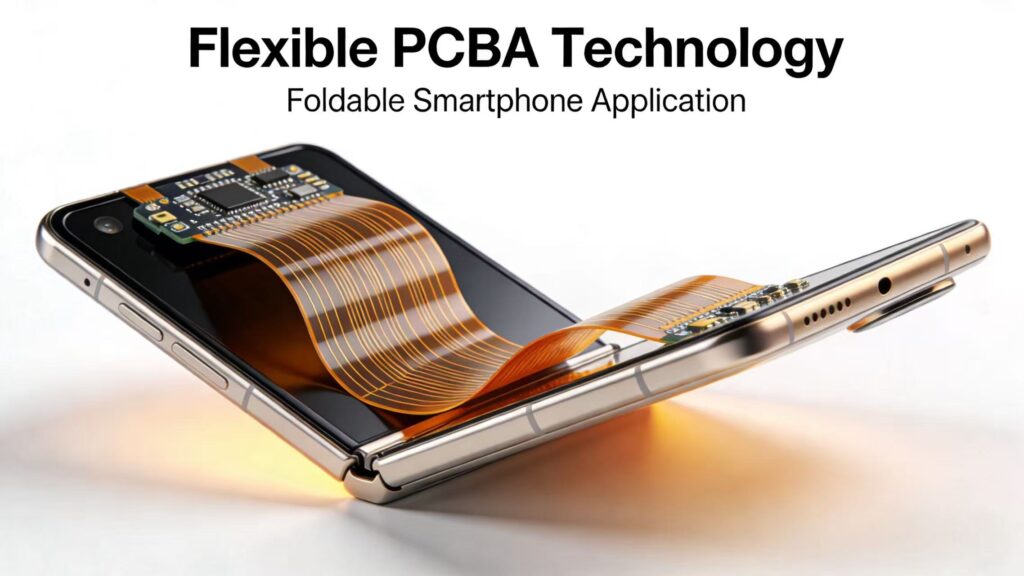
Unlike traditional rigid boards, flexible PCBAs (FPC) can bend, fold, and conform to complex shapes.
This flexibility allows engineers to design more compact and innovative products.
Advantages of flexible PCBA technology
- Reduced product size
- Lightweight design
- improved mechanical durability
- enhanced design freedom
- reduced interconnection complexity
Major application fields
Flexible PCBA technology is widely used in:
- wearable devices
- medical sensors
- foldable smartphones
- automotive electronics
- AR/VR devices
- smart cameras
- robotics
Printed electronics also enable new types of products such as:
- flexible displays
- smart clothing
- electronic skin sensors
As demand for IoT and smart wearable devices continues to grow, flexible PCBA solutions will play a critical role in future electronics design.
YUXUN supports customers in developing custom flexible PCB assembly solutions, including compact wearable devices and AI-enabled smart products.
4. Sustainability and Green Electronics
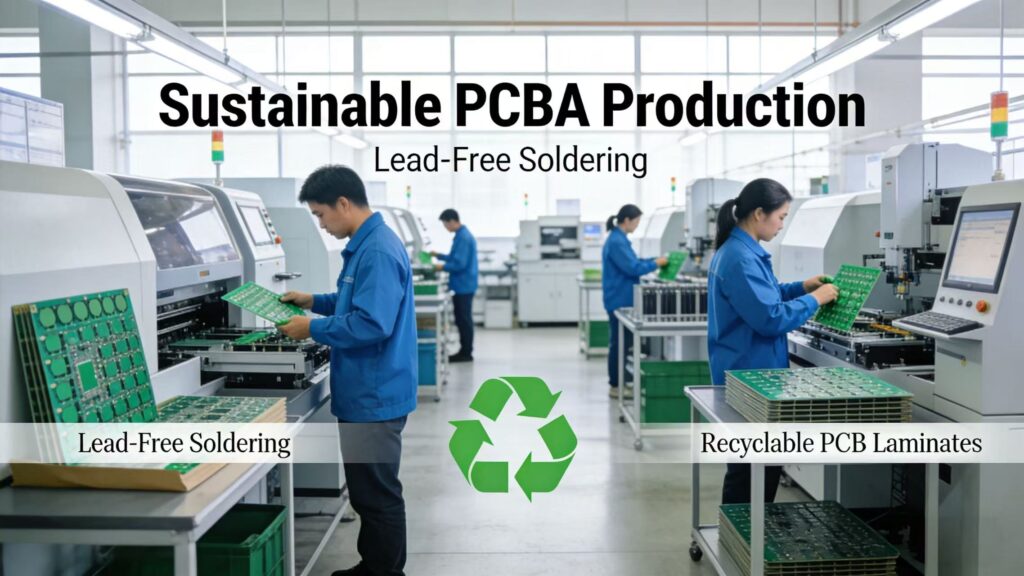
Environmental Responsibility in Electronics Manufacturing
Environmental concerns are pushing the PCBA industry toward sustainable manufacturing practices.
Electronic waste is one of the fastest-growing waste streams globally. Therefore, manufacturers must adopt environmentally friendly technologies and materials.
Green PCBA manufacturing trends
Lead-free soldering
Modern PCBA production uses RoHS-compliant lead-free solder to reduce environmental hazards.
Energy-efficient manufacturing
Smart production systems optimize energy usage during:
- SMT assembly
- reflow soldering
- component testing
Recyclable materials
Many manufacturers are exploring:
- biodegradable substrates
- recyclable PCB laminates
- eco-friendly packaging
Longer product lifecycles
High-quality PCBAs increase product lifespan and reduce electronic waste.
Regulatory compliance
Global markets increasingly require compliance with regulations such as:
- RoHS
- REACH
- WEEE
These standards promote safer materials and responsible recycling practices.
As a global PCBA supplier, OEMAITECH follows strict environmental standards and continuously improves its green manufacturing processes.
Conclusion: The Future of PCBA Technology
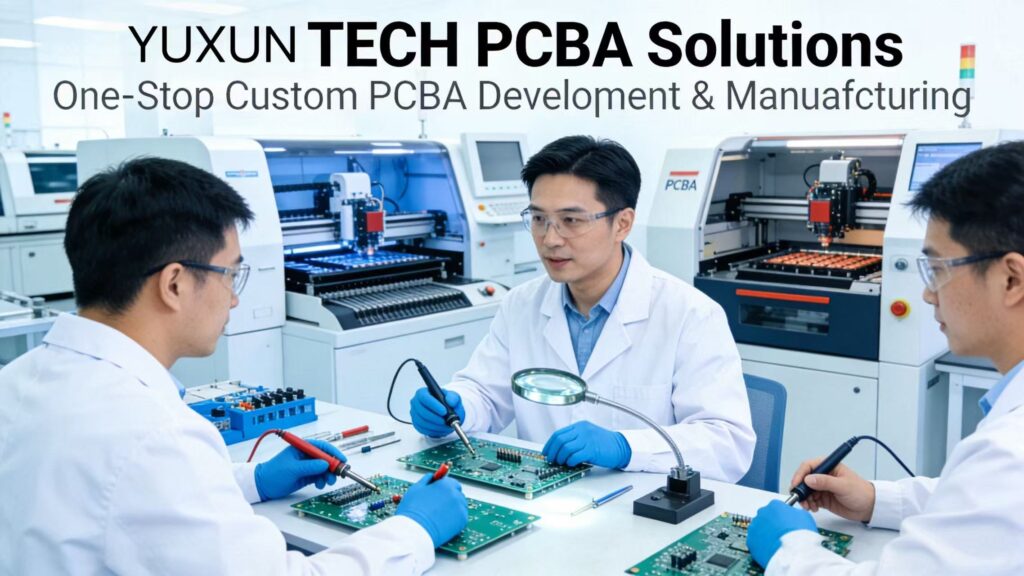
PCBA circuit board technology is entering an exciting new era. Innovations in materials, manufacturing processes, and intelligent automation are transforming how electronics are designed and produced.
Key trends shaping the future include:
- Ultra-compact HDI PCB design
- AI-driven smart manufacturing
- Flexible and printed electronics
- environmentally sustainable production
These developments will enable the next generation of products in industries such as AI hardware, smart homes, IoT, medical electronics, robotics, and automotive technology.
For businesses developing advanced electronic products, choosing an experienced PCBA partner is critical.
With strong engineering capabilities, advanced SMT production lines, and comprehensive OEM/ODM PCBA services, YUXUN provides reliable one-stop solutions for global customers.
From product design and prototyping to mass production, OEMAITECH helps companies transform innovative ideas into market-ready electronic products.
FAQ: Future Trends in PCBA Circuit Board Technology
1. What are the most important future trends in PCBA technology?
The most important trends include miniaturization, AI-driven manufacturing, flexible PCB technology, advanced materials, and sustainable electronics production. These technologies improve performance, efficiency, and product innovation.
2. How does AI improve PCBA manufacturing?
AI enhances PCBA production through automated inspection, predictive maintenance, smart SMT optimization, and intelligent PCB design, which reduces defects and improves manufacturing efficiency.
3. What industries will benefit most from future PCBA innovations?
Industries benefiting the most include:
- IoT devices
- AI smart hardware
- medical electronics
- automotive electronics
- robotics
- wearable technology
These sectors require compact, high-performance PCB assemblies.
4. Why are flexible PCBAs becoming more popular?
Flexible PCBAs allow devices to bend and fold, making them ideal for compact products such as wearables, foldable phones, medical sensors, and smart cameras.
5. How can companies choose the right PCBA manufacturer?
Companies should evaluate:
- engineering capabilities
- SMT production capacity
- quality control systems
- customization services
- supply chain stability
A reliable partner like YUXUN can provide complete design, prototyping, and manufacturing services.