In modern electronics, BLDC motor systems are widely used in drones, electric tools, robotics, automotive electronics, and smart appliances. However, the performance of these systems depends heavily on one critical component—the Motor Control PCB.
A reliable BLDC Motor PCB Board Manufacturer must design circuit boards capable of handling high current loads, thermal stress, electromagnetic interference (EMI), and compact layouts. Poor PCB design can lead to overheating MOSFETs, unstable motor control, reduced efficiency, and shorter product lifespan.
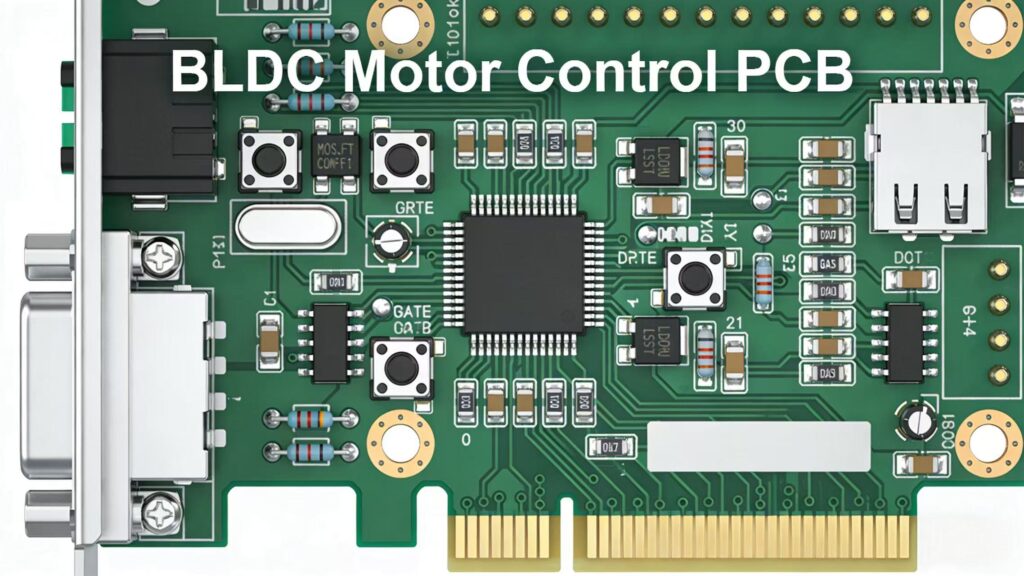
This article explores how a professional PCB Board Manufacturer optimizes Thermal Management PCB structures, High Current PCB routing, and multi-layer integration for BLDC motor applications. It also examines a real-world example: the integrated wireless charging PCB used in smart ring charging cases, where compact design and thermal control are equally critical.
With advanced simulation tools, materials engineering, and precision manufacturing, companies like YUXUN provide customized PCB solutions that improve motor efficiency, reliability, and product lifespan.
Why BLDC Motor Control PCBs Matter in Modern Electronics
Brushless DC motors are the backbone of many modern electronic systems. Their advantages include:
- Higher efficiency than brushed motors
- Lower maintenance requirements
- Longer lifespan
- Precise speed control
- Reduced mechanical noise
However, achieving these benefits requires precise motor control electronics, typically implemented through a Motor Control PCB.
Major BLDC Motor Applications
BLDC control PCBs are widely used in:
- Drone flight control systems
- Electric power tools
- Automotive electronic cooling fans
- Robotic motion control systems
- Smart home appliances
- Industrial automation equipment
- Electric scooters and e-mobility devices
In all these applications, the PCB must handle high switching currents, fast PWM signals, and significant heat generation.
This is why selecting a professional BLDC Motor PCB Board Manufacturer like YUXUN becomes essential for product stability and long-term reliability.
Design Challenge: The Battle Between High Current and Heat
BLDC motor driver circuits typically contain several power MOSFETs, gate driver ICs, current sensing circuits, and power regulators. These components generate heat during high-frequency switching.
If thermal management is poor, several problems occur:
- MOSFET overheating
- PCB copper trace damage
- Reduced motor efficiency
- System instability
- Shortened product lifespan
MOSFET Heating in BLDC Circuits
Power MOSFETs are responsible for switching high currents to drive the motor phases.
Key causes of heat generation include:
- Switching losses
- Conduction losses
- High PWM frequency
- Insufficient copper thickness
A professional High Current PCB manufacturer optimizes the PCB layout to reduce resistance and distribute heat efficiently.
Sensored vs Sensorless BLDC PCB Layout
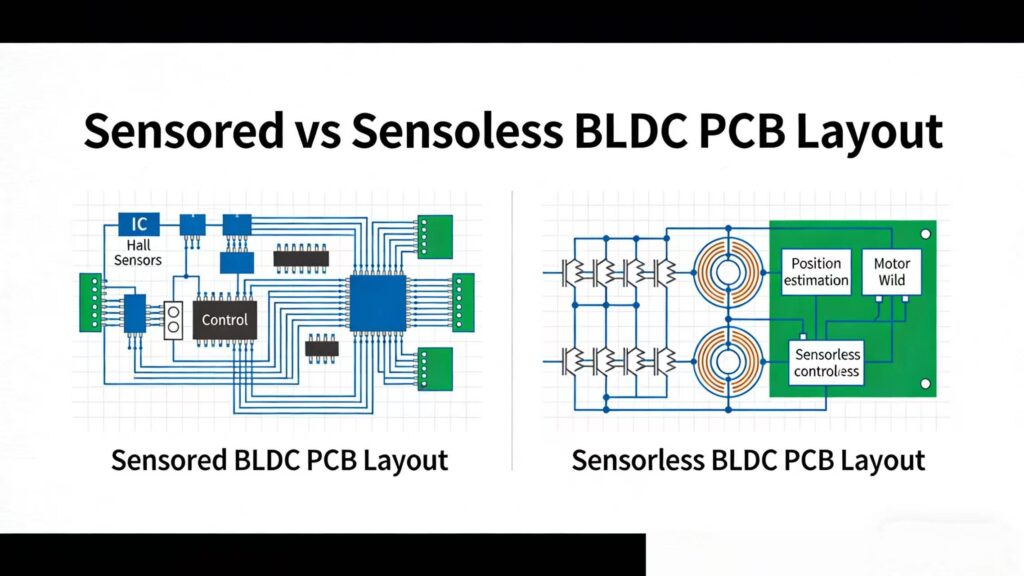
BLDC motors are generally controlled using two methods.
Sensored Motor Control
Sensored BLDC motors use Hall effect sensors to detect rotor position.
PCB design considerations include:
- Dedicated signal routing for sensor lines
- Isolation from high-current power traces
- Noise filtering for stable position feedback
Advantages:
- Smooth startup
- Precise low-speed control
- Higher torque accuracy
Disadvantages:
- More components
- Higher PCB complexity
Sensorless Motor Control
Sensorless BLDC motors rely on back-EMF detection instead of physical sensors.
PCB layout challenges include:
- Accurate analog signal detection
- Sensitive ADC routing
- Noise suppression
Advantages:
- Lower hardware cost
- Reduced component count
- Smaller PCB size
However, PCB layout precision becomes extremely critical to prevent noise interference.
Professional Motor Control PCB designers at YUXUN carefully separate power ground, signal ground, and analog ground to ensure accurate motor control.
PCB Manufacturer Solutions: Materials and Structural Innovation
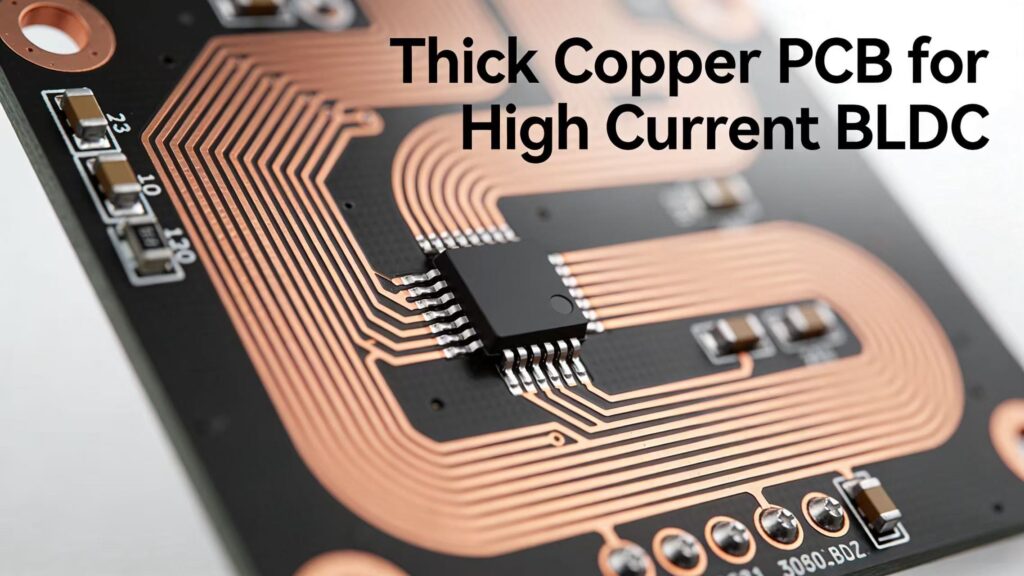
To solve thermal and power challenges, leading PCB Board Manufacturers implement several advanced technologies.
1. Thick Copper PCB for High Current Applications
For high-power BLDC drivers, standard 1oz copper thickness may not be sufficient.
Professional manufacturers use:
- 2oz copper PCB
- 3oz heavy copper PCB
- 4oz high current PCB
Benefits include:
- Lower electrical resistance
- Reduced voltage drop
- Improved thermal dissipation
- Higher current carrying capacity
Typical applications include:
- BLDC motor drivers
- electric power tools
- battery management systems
- charging stations
- power banks
YUXUN specializes in custom thick copper PCB manufacturing, supporting high current industrial and automotive applications.
2. Thermal Management PCB Design
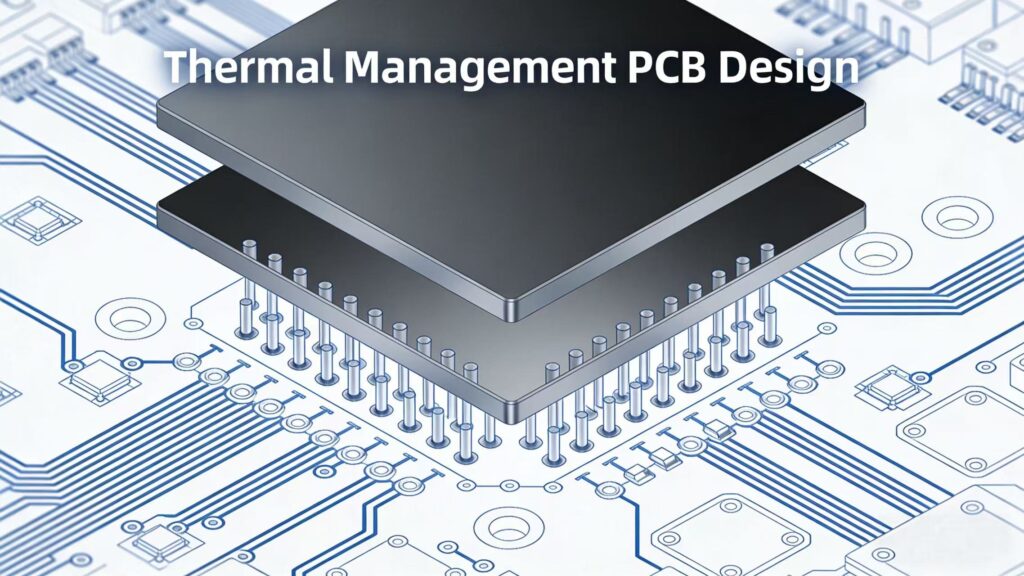
Effective Thermal Management PCB design is critical for high power electronics.
Common techniques include:
Thermal Vias
Thermal vias transfer heat from top-layer components to internal copper planes.
Benefits:
- Faster heat spreading
- Reduced hotspot temperature
- Improved component lifespan
Metal Core PCB (MCPCB)
For extreme heat conditions, manufacturers use metal core PCBs, typically aluminum-based.
Advantages include:
- Excellent thermal conductivity
- Mechanical stability
- Efficient heat spreading
MCPCBs are widely used in:
- LED lighting systems
- motor drivers
- power converters
3. EMI Optimization for Smart Devices
High-frequency motor drivers can create electromagnetic noise.
This can interfere with nearby electronics such as:
- microphones
- wireless communication modules
- AI voice recognition systems
PCB manufacturers mitigate EMI through:
- optimized ground planes
- differential signal routing
- shielded analog sections
- filtering circuits
For example, AI voice products like smart speakers require extremely clean signal environments.
YUXUN engineers design low-noise motor control PCBs that minimize EMI impact on sensitive components.
Application Example: Smart Ring Wireless Charging Case
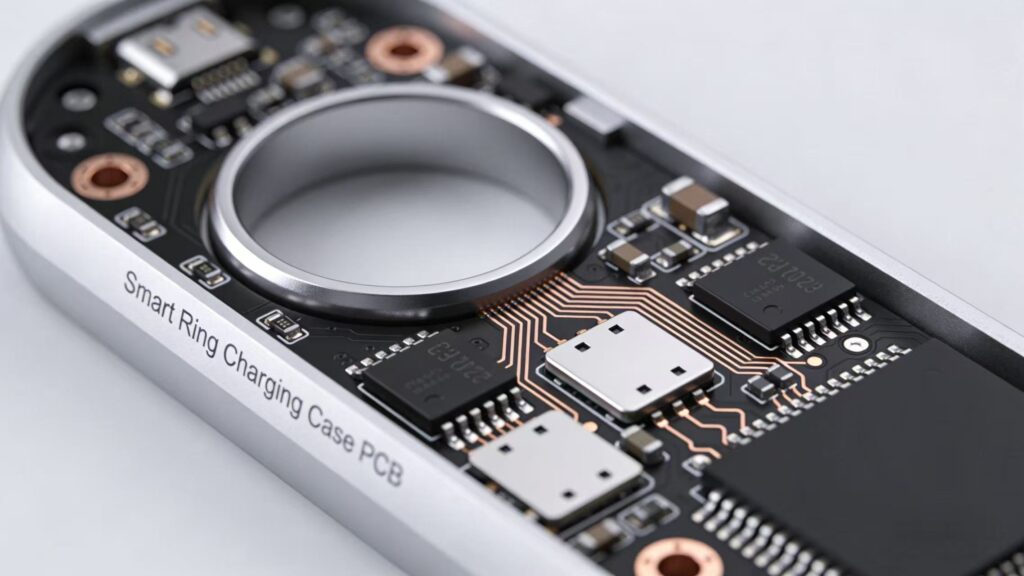
A fascinating example of compact PCB innovation is the smart ring charging case.
These devices integrate several technologies into a very small PCB.
Key Modules Integrated into the PCB
A smart ring charging case typically contains:
- Wireless charging receiver coil
- Magnetic alignment module
- Battery management circuit
- Power management IC
- Charging protection circuit
All components must fit inside a compact multi-layer PCB design.
PCB Integration Challenges
Design challenges include:
- extremely limited space
- heat from wireless charging
- power efficiency requirements
- electromagnetic interference
Wireless charging coils generate heat during operation, so Thermal Management PCB design becomes essential.
Professional PCB manufacturers solve this through:
- multi-layer stack optimization
- thermal vias under power ICs
- copper plane heat spreading
- efficient coil-to-board integration
YUXUN’s custom PCB R&D team specializes in high-density PCB integration for wearable electronics and IoT products.
Advanced Manufacturing Technologies Used by YUXUN
As a professional PCB Board Manufacturer, YUXUN focuses heavily on custom R&D and precision manufacturing.
Key capabilities include:
High Density PCB Manufacturing
Supporting:
- HDI PCB
- multi-layer PCB (up to 16+ layers)
- microvia technology
Thermal Simulation and Power Analysis
Before production, engineers perform:
- thermal simulation analysis
- current distribution simulation
- EMI prediction modeling
This ensures optimal high current PCB performance before mass manufacturing.
Custom PCB Solutions for AI and Smart Devices
YUXUN provides custom PCB design and manufacturing for industries including:
- smart home electronics
- AI smart speakers
- IoT devices
- drones and robotics
- motor control systems
- wearable electronics
Their engineering-driven approach helps customers reduce development time and improve product reliability.
Conclusion
As BLDC motors become increasingly common in drones, electric tools, robotics, and automotive electronics, the importance of high-performance Motor Control PCB design continues to grow.
Handling high current loads, thermal stress, and electromagnetic interference requires expertise in materials engineering, PCB layout optimization, and thermal management.
Professional manufacturers like YUXUN combine advanced simulation tools, thick copper PCB technology, thermal management solutions, and high-density integration to deliver reliable BLDC motor control PCBs.
For companies developing high power electronics, AI smart devices, or wearable technology, choosing a PCB board manufacturer with strong R&D capabilities is essential for achieving efficiency, reliability, and long product life.
FAQ – BLDC Motor PCB Design
1. What is a BLDC motor control PCB?
A BLDC motor control PCB is a circuit board designed to drive brushless DC motors. It typically contains MOSFET drivers, microcontrollers, current sensors, and power management circuits to control motor speed and direction.
2. Why is thick copper PCB important for BLDC motor drivers?
Thick copper PCBs (2oz–4oz) reduce electrical resistance and improve heat dissipation. This allows the PCB to handle high current loads without overheating or voltage loss.
3. What is the best PCB material for high power motor control?
For most applications, FR-4 with thick copper is sufficient. However, for high thermal environments, metal core PCBs (MCPCB) or aluminum substrates provide better heat dissipation.
4. How does PCB layout affect motor performance?
Poor PCB layout can cause noise, heat buildup, and unstable motor operation. Proper layout separates power and signal circuits, reduces EMI, and improves thermal management.
5. Can a PCB manufacturer help optimize motor driver design?
Yes. Professional manufacturers like YUXUN provide design support, thermal simulation, and current analysis, ensuring the PCB meets performance and reliability requirements before production.