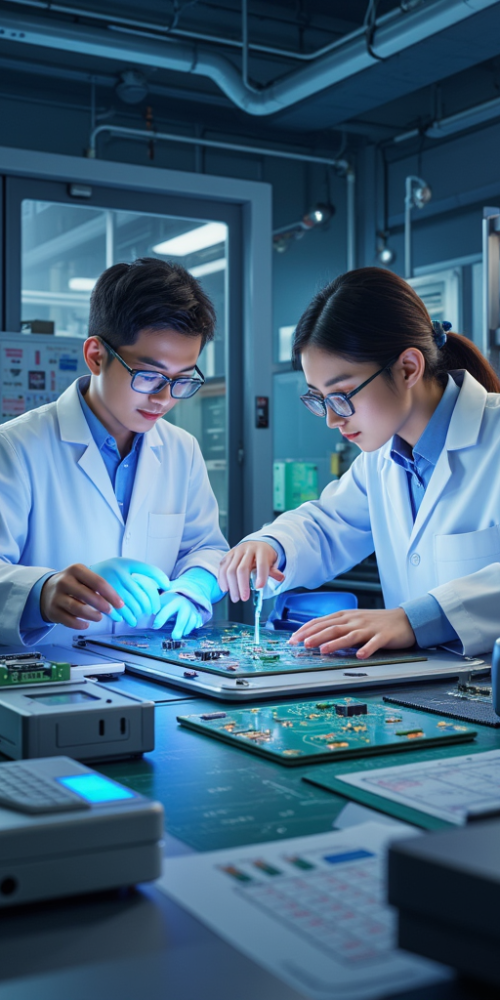
Artificial Intelligence is rapidly transforming the electronics industry, and the global PCB market in 2026 is increasingly driven by AI hardware demand. The expansion of AI servers, high-performance computing (HPC), edge AI devices, and smart consumer electronics is creating unprecedented opportunities for advanced PCB Board Manufacturers.
According to industry estimates, the global PCB market continues to grow steadily between 2025 and 2026, largely fueled by the expansion of AI data centers, machine learning hardware, and intelligent edge devices. However, the industry is no longer competing purely on manufacturing scale. Instead, the focus has shifted toward high-value technology, such as:

- High-Density Interconnect (HDI) PCBs
- High-frequency and high-speed PCBs
- Advanced packaging substrates
- Rigid-flex PCB solutions for compact AI devices
This transition marks a critical change in the PCB ecosystem. Manufacturers must now integrate advanced materials, precision manufacturing, and intelligent production technologies.
At the same time, AI is not only driving demand for advanced hardware. It is also revolutionizing PCB manufacturing itself, enabling smart factories, automated inspection, and AI-assisted design.
For companies such as YUXUN, which specialize in custom PCB R&D and advanced PCBA manufacturing, the AI era represents both a challenge and a major opportunity.
AI Hardware Is Driving New PCB Technology Requirements
AI hardware platforms are fundamentally different from traditional electronic systems. They demand higher bandwidth, lower signal loss, stronger thermal performance, and more compact integration.
These requirements push PCB manufacturers to adopt new materials and new design methodologies.
1. High-Frequency and High-Speed Materials
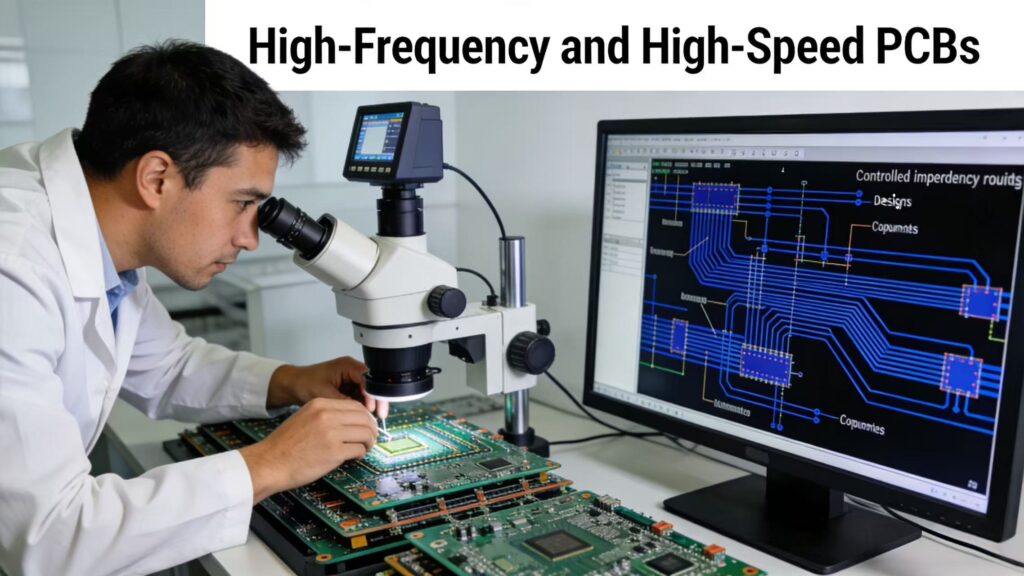
AI servers and HPC platforms process enormous volumes of data every second. To maintain signal integrity, these systems require high-frequency PCB materials with extremely low dielectric loss.
Typical requirements include:
- Low-loss laminates for high-speed signal transmission
- Controlled impedance routing
- Multi-layer stack-up optimization
- High-precision microvias and laser drilling
For example, advanced AI hardware PCBs often exceed 20–30 layers, integrating high-speed interfaces such as PCIe, DDR memory buses, and high-bandwidth networking chips.
As a result, PCB manufacturers must master technologies such as:
- High-frequency PCB fabrication
- HDI sequential lamination
- Back drilling and impedance control
- High-speed signal integrity design
YUXUN’s engineering team supports customers by providing design-for-manufacturability (DFM) analysis for high-speed PCB designs, ensuring stable performance in demanding AI computing environments.
2. The Thermal Management Revolution
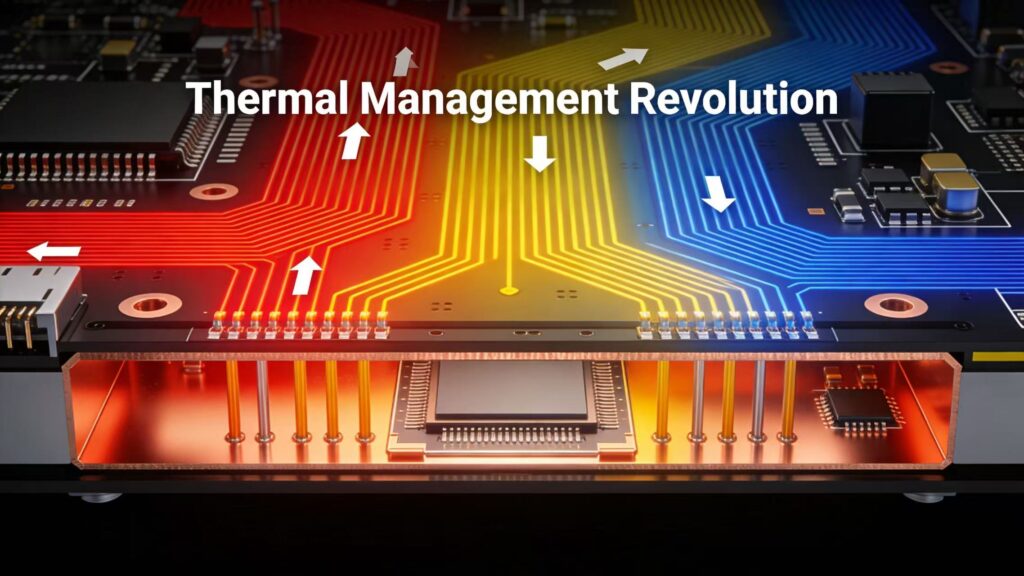
AI processors consume significantly more power than traditional chips.
For example, modern AI GPUs used in data centers can consume 400W–700W per chip, which creates enormous thermal challenges.
This has a direct impact on PCB design:
Key requirements include:
- High thermal conductivity materials
- Heavy copper PCBs
- Thermal vias and heat-spreading structures
- Advanced PCB stack-up for heat dissipation
Effective thermal management PCBs are essential for maintaining reliability in AI servers, power modules, and high-performance computing hardware.
Manufacturers that can integrate thermal simulation with PCB design will gain a major competitive advantage.
3. AI Expands to Edge Devices
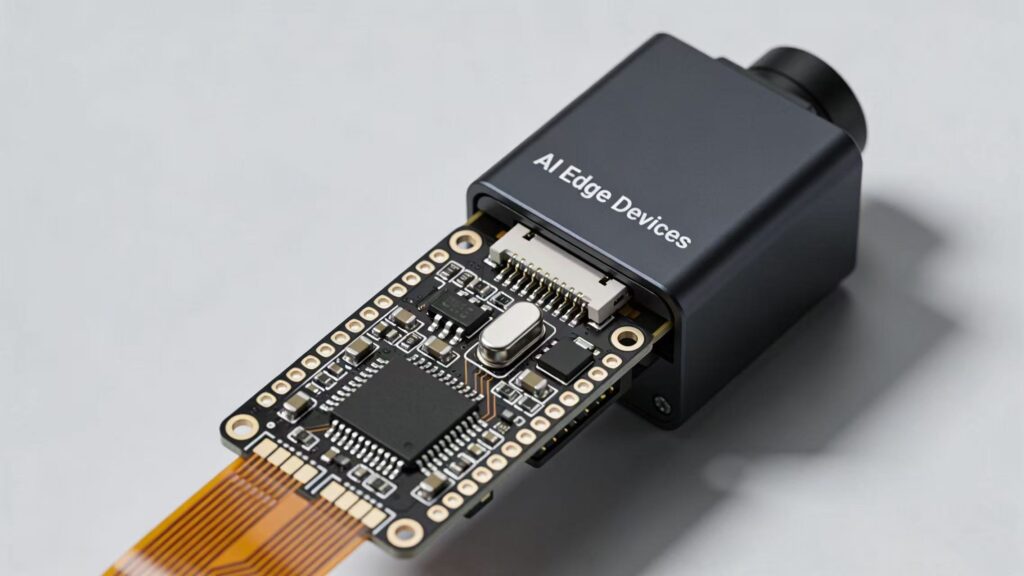
While AI servers drive demand for large, complex PCBs, the edge computing revolution is expanding the PCB market in another direction: miniaturization.
AI technology is rapidly moving into everyday devices such as:
- AI voice products with local speech recognition
- Smart cameras and security systems
- Intelligent live-streaming boxes
- Smart home control hubs
- AI wearable electronics
These devices require compact, highly integrated PCBs with strict electromagnetic compatibility (EMC) requirements.
Typical design challenges include:
- Small form-factor PCBs
- High-density component placement
- Low-power circuit optimization
- RF shielding and EMI control
YUXUN provides custom AI hardware PCB solutions for these edge devices, helping clients reduce board size while maintaining signal stability and manufacturing reliability.
AI Is Transforming PCB Manufacturing Itself
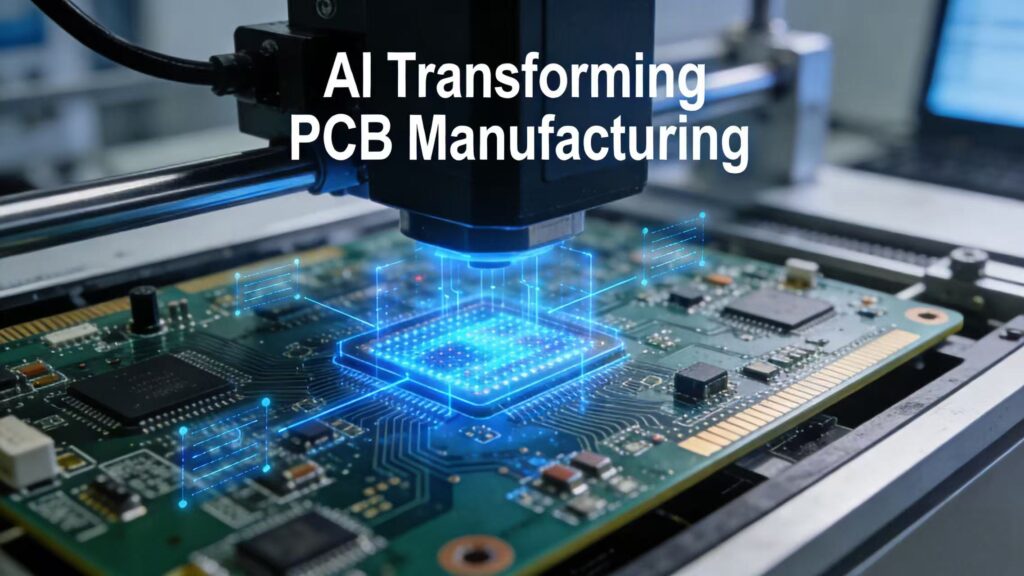
The influence of AI goes beyond product demand. It is also transforming the manufacturing processes of PCB factories.
Smart manufacturing technologies are becoming essential for improving production efficiency and product quality.
AI-Assisted PCB Design (DFM Automation)
Traditional PCB design reviews often require manual inspection by experienced engineers.
However, AI-based Design for Manufacturability (DFM) tools can now automatically analyze PCB layouts and detect potential issues such as:
- Trace spacing violations
- Manufacturing tolerances
- Thermal imbalance
- Soldering risks
This allows PCB manufacturers to identify design problems early, reducing development costs and accelerating product launch cycles.
AI Vision Inspection (AOI Automation)
Quality inspection is another area where AI is making a major impact.
Modern AI-powered Automated Optical Inspection (AOI) systems can detect microscopic defects with far greater accuracy than traditional methods.
Examples of defects detected by AI vision include:
- Solder joint issues
- Missing components
- Short circuits and open circuits
- PCB surface contamination
By combining AI with AOI systems, PCB manufacturers can significantly improve yield rates and reduce quality risks.
Digital Quotation and Rapid Prototyping
Fast product iteration is critical for modern electronics.
Industries such as:
- power banks
- LED lighting products
- smart home electronics
- IoT devices
require extremely fast development cycles.
AI-driven digital platforms now enable PCB manufacturers to offer:
- Instant PCB price quotations
- Automated DFM reports
- Online PCB ordering systems
- Rapid PCB prototyping services
This allows customers to receive engineering feedback within hours, dramatically shortening product development timelines.
YUXUN has invested in digital PCB manufacturing systems to support global clients with faster response times and flexible custom PCB solutions.
How to Choose the Right PCB Partner in the AI Era
As AI hardware becomes more complex, choosing the right PCB Board Manufacturer becomes a strategic decision for hardware developers.
The following factors are critical.
1. Advanced Technology Capabilities
A reliable partner should have proven experience in:
- High-frequency PCB manufacturing
- High-speed digital PCB design
- HDI and microvia technology
- Multi-layer AI server PCBs
- Rigid-flex PCB solutions
Manufacturers with strong R&D capabilities are better equipped to handle complex AI hardware requirements.
2. Digital Manufacturing Infrastructure
Modern PCB production should support:
- Online design analysis tools
- Real-time DFM feedback
- Automated production monitoring
- Smart factory systems
Digital manufacturing significantly improves both efficiency and product reliability.
3. Green and Sustainable Production
Environmental compliance is becoming increasingly important for global electronics companies.
Key environmental standards include:
- Halogen-free PCB materials
- RoHS compliance
- Lead-free soldering processes
- Energy-efficient production systems
Companies that prioritize green manufacturing will gain stronger partnerships with global technology brands.
Why YUXUN Is Positioned for the AI PCB Market
As the demand for AI hardware continues to grow, YUXUN is actively strengthening its capabilities in custom PCB R&D, advanced PCBA assembly, and intelligent manufacturing.
Key advantages include:
Strong Custom Engineering Support
YUXUN provides design consultation and DFM optimization for AI hardware PCBs, helping customers achieve better signal integrity and manufacturability.
Advanced Manufacturing Technology
The company supports:
- High-frequency PCB fabrication
- Multi-layer HDI PCB production
- High-speed signal routing boards
- Compact PCBs for AI edge devices
Rapid Prototyping and Global Delivery
With a flexible manufacturing system, YUXUN can provide rapid PCB prototyping and scalable mass production, enabling customers to accelerate product development.
Commitment to Innovation
YUXUN continuously invests in AI-enabled manufacturing and automated inspection systems, ensuring consistent quality and competitive production efficiency.
Conclusion
The year 2026 marks a turning point for the PCB industry. Artificial Intelligence is not only driving demand for advanced electronic hardware but also transforming the way PCBs are designed and manufactured.
Key trends shaping the industry include:
- explosive growth in AI server hardware
- rising demand for high-frequency and high-speed PCBs
- expansion of edge AI devices
- smart factory transformation in PCB manufacturing
In this evolving landscape, PCB manufacturers are no longer just hardware suppliers. They are becoming critical innovation partners that connect chips, algorithms, and real-world devices.
Companies like YUXUN, with strong capabilities in custom PCB R&D, high-frequency manufacturing, and intelligent production, are well positioned to support the next generation of AI hardware.
Frequently Asked Questions (FAQ)
1. What is an AI PCB board?
An AI PCB board is a printed circuit board specifically designed to support artificial intelligence hardware such as AI servers, machine learning accelerators, smart cameras, and edge computing devices. These boards require high-speed signal transmission, advanced thermal management, and complex multi-layer structures.
2. Why do AI servers require high-frequency PCBs?
AI servers process extremely large data volumes. High-frequency PCBs use low-loss materials and precise impedance control to maintain signal integrity in high-speed communication interfaces such as PCIe, high-speed Ethernet, and memory buses.
3. What challenges do PCB manufacturers face in AI hardware?
Major challenges include:
- high-speed signal routing
- thermal management for high-power chips
- high-layer-count PCB manufacturing
- miniaturization for edge AI devices
- strict quality control requirements
These challenges require advanced materials and highly precise manufacturing processes.
4. How does AI improve PCB manufacturing?
AI technologies improve PCB production by enabling:
- automated design review (DFM)
- AI-powered defect detection in AOI inspection
- predictive maintenance for manufacturing equipment
- faster quotation and digital ordering systems
These technologies significantly improve production efficiency and quality control.
5. What industries will drive PCB demand in the AI era?
Key growth industries include:
- AI data centers
- autonomous vehicles
- smart home devices
- wearable electronics
- industrial IoT systems
- smart cameras and security systems