
PCBA and BMS are two critical technologies widely used in modern electronic products and battery-powered systems. PCBA (Printed Circuit Board Assembly) refers to a circuit board where electronic components are mounted and soldered to create a functional electronic system. BMS (Battery Management System), on the other hand, is a specialized electronic system designed to monitor, protect, and manage rechargeable battery packs.
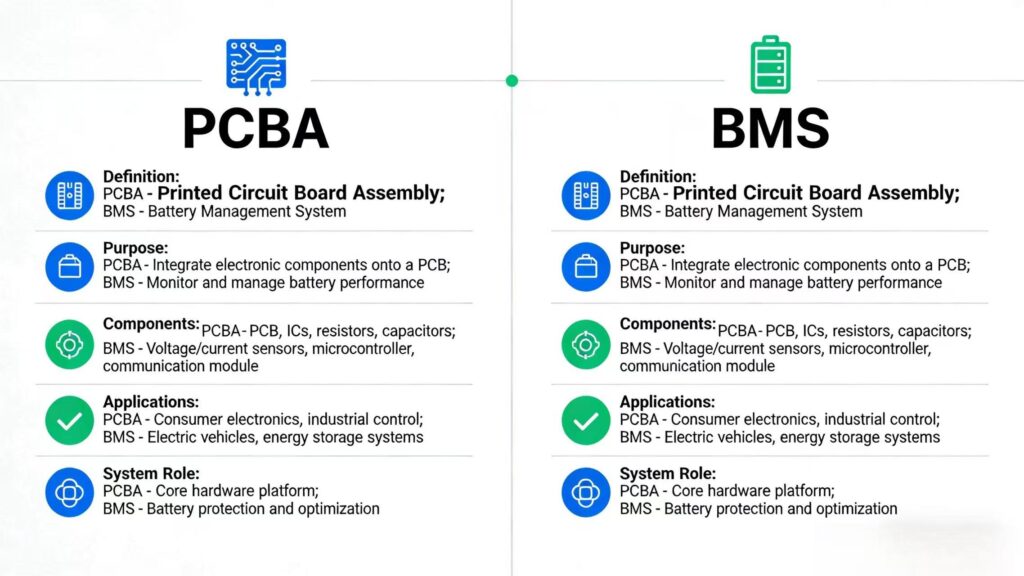
Although both involve electronic circuits and control systems, their design purpose, functions, and applications are significantly different. PCBA serves as the core electronic platform that enables device functionality, while BMS focuses specifically on battery safety, performance optimization, and lifecycle management.
Understanding the difference between PCBA and BMS is essential for manufacturers, engineers, and product developers working in fields such as energy storage, electric vehicles, IoT devices, smart electronics, and portable battery-powered products.
As a professional electronics solution provider, YUXUN specializes in custom PCBA design, BMS development, and integrated hardware solutions, offering end-to-end services from circuit design to mass production.
What Is PCBA?
Definition of PCBA
PCBA (Printed Circuit Board Assembly) refers to the complete assembly of electronic components onto a printed circuit board (PCB). This process transforms a bare PCB into a fully functional electronic circuit capable of performing specific tasks.
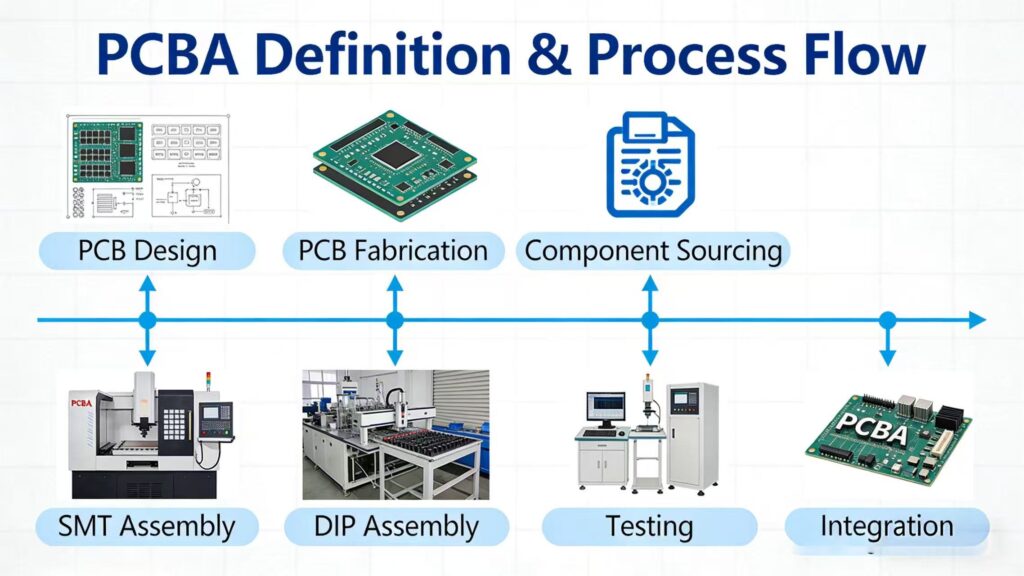
The PCBA process typically includes:
- PCB design
- PCB fabrication
- Component sourcing
- SMT (Surface Mount Technology) assembly
- DIP (Dual In-line Package) assembly
- Functional testing
- Final product integration
Once assembled, the PCBA becomes the central control system of an electronic product.
Key Functions of PCBA
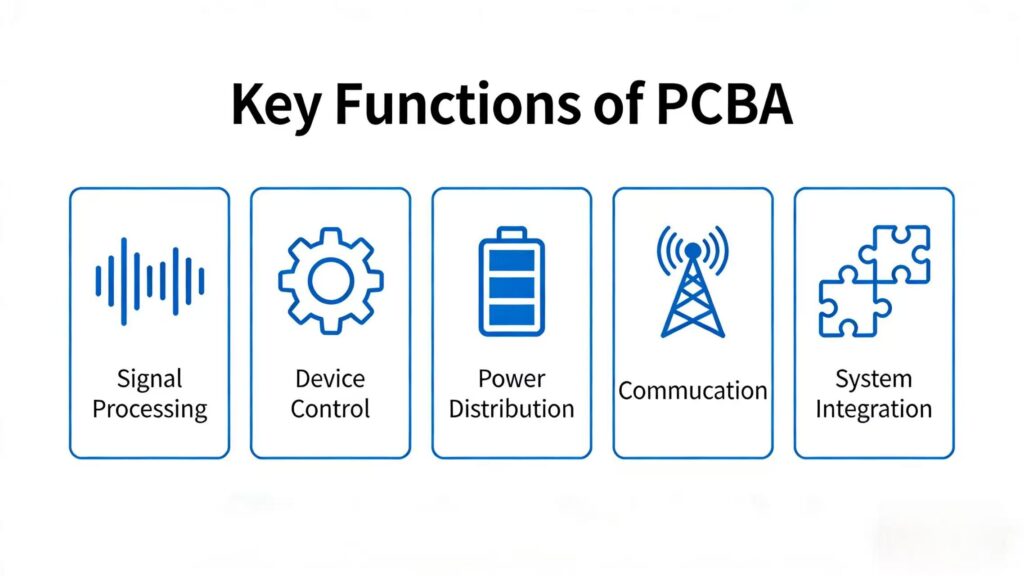
A PCBA can perform a wide range of functions depending on the circuit design. Common roles include:
1. Signal Processing
PCBA circuits process digital and analog signals between components such as sensors, processors, and communication modules.
2. Device Control
Microcontrollers or processors mounted on the PCBA manage system operations.
3. Power Distribution
PCBA distributes power to different components within a device.
4. Communication Functions
Many PCBAs integrate communication technologies such as:
- WiFi
- Bluetooth
- NFC
- RF modules
5. System Integration
A PCBA acts as the electronic backbone of modern devices, integrating sensors, processors, memory, and power systems.
Typical Applications of PCBA
PCBA technology is used across nearly every modern electronic industry.
Common applications include:
- Smart home devices
- IoT products
- AI smart speakers
- Wearable electronics
- Industrial automation equipment
- automotive electronics
- medical devices
- wireless communication devices
Companies like YUXUN develop custom PCBAs for AI hardware, smart devices, and intelligent electronics, helping clients accelerate product development and reduce manufacturing complexity.
What Is BMS?
Definition of BMS
A Battery Management System (BMS) is an electronic system designed to monitor and control rechargeable battery packs.
Its primary purpose is to ensure that batteries operate safely, efficiently, and within optimal parameters.
A BMS is commonly used in:
- lithium battery packs
- energy storage systems
- electric vehicles
- power tools
- portable electronics
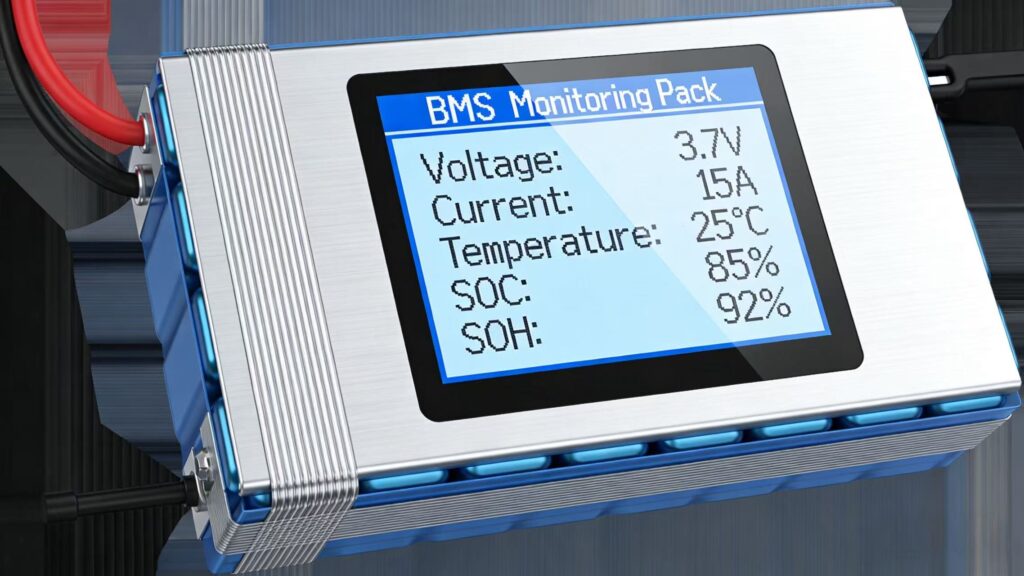
The BMS continuously monitors battery parameters such as:
- voltage
- current
- temperature
- state of charge (SOC)
- state of health (SOH)
Key Functions of BMS
1. Battery Protection
The BMS prevents dangerous operating conditions including:
- overcharge
- over-discharge
- overcurrent
- short circuits
- overheating
2. Battery Monitoring
A BMS monitors individual battery cells in real time to ensure safe operation.
3. Cell Balancing
Battery cells may charge or discharge unevenly over time.
The BMS balances cell voltages to maintain consistent performance and extend battery lifespan.
4. Performance Optimization
The BMS improves energy efficiency and battery longevity by optimizing charging and discharging cycles.
5. Communication and Diagnostics
Advanced BMS systems can communicate with external devices or control units to provide system data and diagnostics.
Key Differences Between PCBA and BMS
Although both involve circuit boards and electronics, PCBA and BMS serve fundamentally different roles.
| Feature | PCBA | BMS |
|---|---|---|
| Definition | Assembled electronic circuit board | Battery management control system |
| Main Purpose | Enable electronic device functionality | Protect and manage battery packs |
| Core Components | Microcontrollers, ICs, sensors, communication modules | Battery monitoring ICs, protection circuits, balancing circuits |
| Application Scope | Nearly all electronic products | Battery-powered systems |
| System Role | Device control platform | Battery safety and energy management |
| Complexity | Highly customizable | Specialized battery control system |
In many products, a BMS is actually implemented as a specialized PCBA designed specifically for battery management tasks.
How PCBA and BMS Work Together
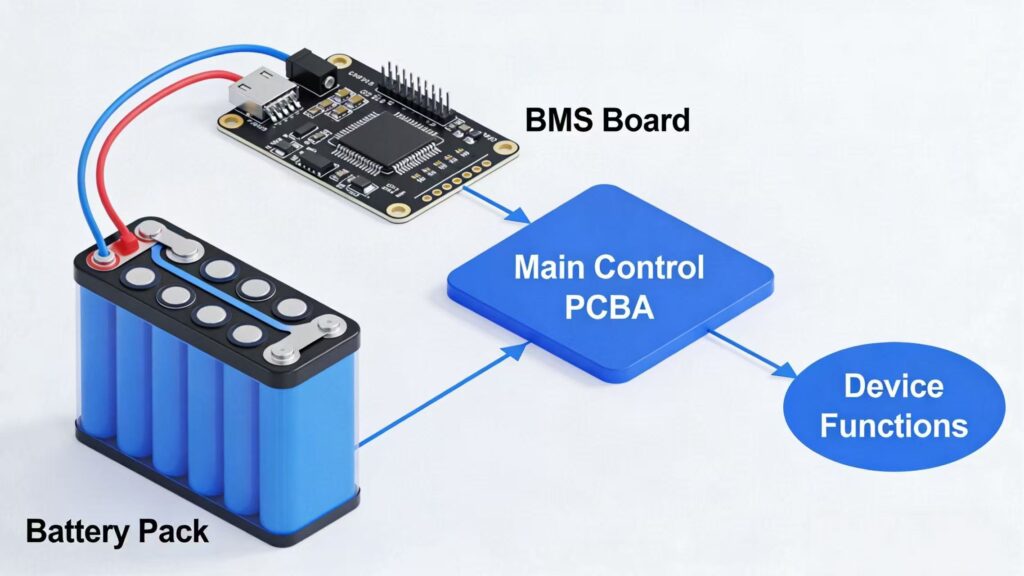
In battery-powered devices, PCBA and BMS often work together as part of an integrated electronic architecture.
Example system structure:
Battery Pack
↓
BMS Board
↓
Main Control PCBA
↓
Device Functions
The BMS ensures battery safety and efficiency, while the PCBA controls the overall system operation.
For example, in:
- electric scooters
- energy storage systems
- smart robots
- portable electronics
Both systems are essential for reliable performance.
Custom PCBA and BMS Development at YUXUN
Developing reliable electronics requires strong engineering expertise and manufacturing capabilities.
YUXUN provides one-stop custom electronics development services, including:
Custom PCBA Design
- circuit design
- schematic development
- PCB layout
- component selection
BMS Development
- lithium battery protection systems
- multi-cell battery management
- smart battery monitoring
- customized firmware algorithms
Manufacturing Services
YUXUN also provides:
- SMT assembly
- prototype development
- functional testing
- small batch production
- mass manufacturing
With strong R&D capabilities and flexible customization services, YUXUN helps global clients develop high-performance smart electronics, AI devices, and battery-powered products.
Why Understanding the Difference Matters
For engineers and product developers, understanding the difference between PCBA and BMS helps optimize system design.
Benefits include:
- improved device safety
- longer battery lifespan
- better power efficiency
- more reliable electronic products
- easier product development
As electronic devices become more complex, the integration between PCBA control systems and intelligent BMS technology will continue to grow.
FAQ
1. Is a BMS a type of PCBA?
Yes. A BMS is typically implemented as a specialized PCBA designed specifically to manage battery systems.
2. Can electronic products work without a BMS?
Battery-powered devices using lithium batteries should always include a BMS to ensure safety and prevent battery damage.
3. What industries use PCBA technology?
PCBA is used in nearly all electronic industries, including consumer electronics, IoT, medical devices, automotive electronics, and industrial automation.
4. What types of batteries require a BMS?
Most rechargeable lithium batteries require a BMS, including:
- Li-ion batteries
- LiFePO4 batteries
- lithium polymer batteries
5. Can PCBA and BMS be integrated on one board?
Yes. In many compact electronic devices, engineers integrate BMS circuits and device control circuits onto a single PCBA to save space and reduce costs.