In today’s fast-evolving electronics industry, companies are constantly developing smarter, smaller, and more powerful devices. Standard circuit boards often cannot meet the unique functional requirements of modern electronic products.
This is where PCBA Custom becomes essential.
PCBA Custom (Custom PCB Assembly) refers to the process of designing and manufacturing a printed circuit board assembly based on specific product requirements. It involves PCB design, component sourcing, SMT assembly, testing, firmware programming, and final product integration.
Custom PCBA solutions allow companies to create high-performance electronic systems tailored to their applications, from IoT devices and AI hardware to industrial automation and smart home systems.
For businesses developing new electronics products, working with a reliable custom PCB assembly manufacturer such as YUXUN ensures stable production quality, optimized design performance, and scalable manufacturing.
This comprehensive guide explains:
- What PCBA custom means
- The full custom PCB assembly process
- Key advantages of customized PCBA
- Cost factors in PCB assembly
- Major industry applications
- How to choose the right PCBA manufacturer
Understanding these aspects can help companies reduce development risks and accelerate product commercialization.
What Does PCBA Custom Mean?
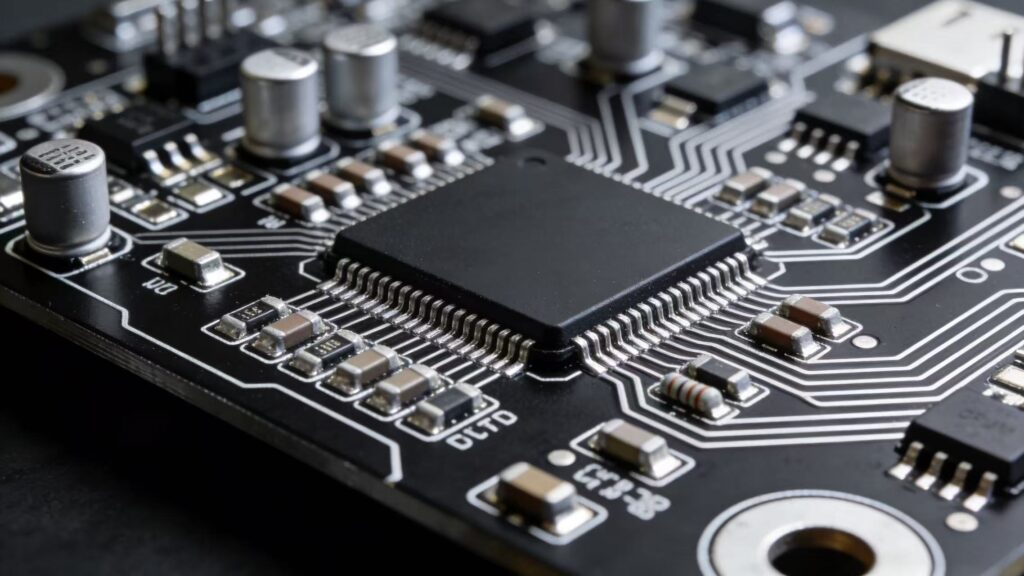
PCBA Custom refers to the design, engineering, and assembly of a printed circuit board based on specific electronic product requirements.
Unlike off-the-shelf PCB solutions, custom PCB assembly is developed specifically for a particular product, ensuring optimal electrical performance, mechanical structure, and reliability.
A complete custom PCBA service usually includes:
- PCB schematic design
- PCB layout engineering
- Electronic component sourcing
- SMT assembly
- DIP through-hole assembly
- Functional testing
- Firmware programming
- Final product assembly
Because every electronic product has unique design requirements, custom PCB assembly enables manufacturers to build optimized hardware platforms that support advanced functionality.
For example:
- AI smart hardware requires high-speed data processing
- IoT devices require ultra-low power consumption
- Automotive electronics require high reliability and temperature resistance
A custom PCBA solution ensures the circuit board meets these specialized needs.
The Complete PCBA Custom Process
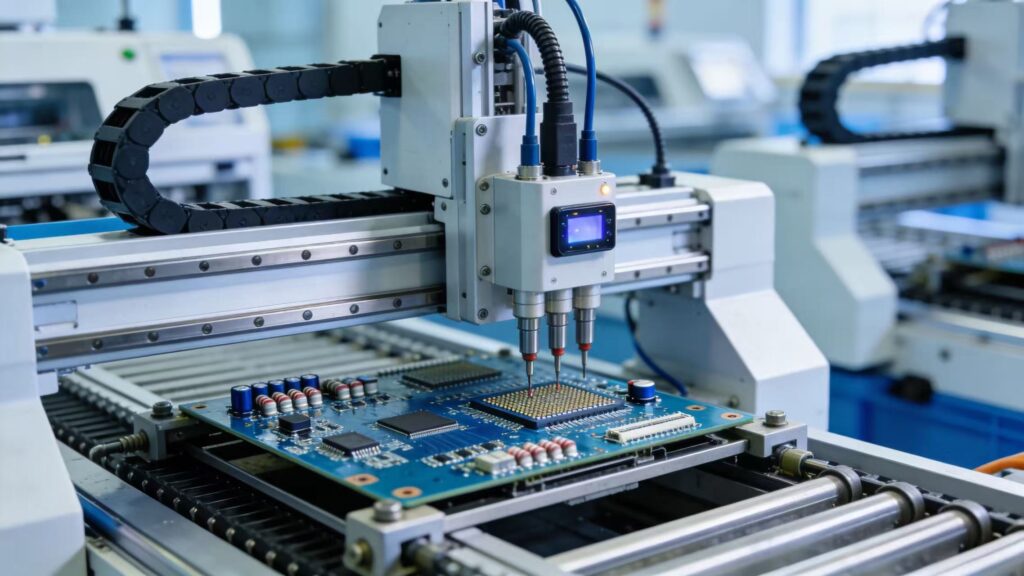
Developing a custom PCB assembly involves several engineering and manufacturing stages.
1 PCB Design and Engineering
The first step in PCBA customization is circuit design and PCB layout engineering.
Engineers use professional design software such as:
- Altium Designer
- Eagle
- KiCad
- Cadence
During this stage, designers create the circuit schematic and PCB layout while considering several critical factors:
- Signal integrity
- Power distribution
- Thermal management
- Electromagnetic interference (EMI)
- PCB stack-up design
- Component placement optimization
A well-designed PCB significantly improves product stability and manufacturing efficiency.
2 Electronic Component Selection and Procurement
Selecting the right electronic components is essential for product performance and supply chain stability.
Key considerations include:
- Component specifications
- Price optimization
- Long-term supply availability
- Compatibility with PCB design
- Manufacturer reliability
Professional PCBA manufacturers often provide component sourcing services to help customers reduce procurement risks.
At YUXUN, the engineering team works with certified global suppliers to ensure high-quality components and stable supply chains.
3 PCB Fabrication
After the design phase is completed, the printed circuit board enters the PCB fabrication stage.
Common PCB types include:
- Single-layer PCB
- Double-layer PCB
- Multilayer PCB
- Flexible PCB
- Rigid-flex PCB
Different applications require different PCB structures.
For example:
- Consumer electronics typically use multilayer PCBs
- Wearable devices use flexible PCBs
- Industrial equipment often requires high-reliability multilayer boards
4 SMT and DIP Assembly
Once the PCB boards are fabricated, electronic components are assembled using automated equipment.
The two primary assembly technologies are:
SMT (Surface Mount Technology)
SMT is the most widely used method in modern electronics manufacturing.
Typical SMT processes include:
- Solder paste printing
- Pick-and-place component mounting
- Reflow soldering
- AOI inspection
DIP (Dual In-line Package) Assembly
DIP assembly is used for through-hole components, especially in power electronics and industrial equipment.
Processes include:
- Manual or automated insertion
- Wave soldering
- Post-assembly inspection
Modern PCBA factories combine SMT and DIP assembly lines to support different product designs.
5 Testing and Quality Control
Testing ensures the final PCBA meets functional and reliability requirements.
Common testing methods include:
- AOI (Automated Optical Inspection)
- ICT (In-Circuit Testing)
- Functional testing
- X-ray inspection
- Burn-in testing
Strict quality control helps detect manufacturing defects and guarantees long-term product reliability.
At YUXUN, every custom PCBA project undergoes multiple inspection stages to ensure high production quality.
Advantages of PCBA Custom Solutions
Custom PCB assembly provides several advantages for electronics manufacturers.
Product Differentiation
Custom PCBA allows companies to develop unique electronic products with proprietary designs and advanced functionality.
This helps brands stand out in competitive markets.
Higher Performance
Custom PCB designs can optimize:
- Signal routing
- Power consumption
- Heat dissipation
- Circuit efficiency
This leads to better overall device performance.
Better Integration
Modern electronics demand smaller and more compact designs.
Custom PCBAs allow engineers to integrate multiple modules into a single board, such as:
- Communication modules
- Power management
- Sensors
- Microcontrollers
Scalable Mass Production
Once a custom PCBA design is validated, manufacturers can easily scale production to thousands or millions of units.
This ensures consistent quality and lower unit costs.
Applications of Custom PCBA
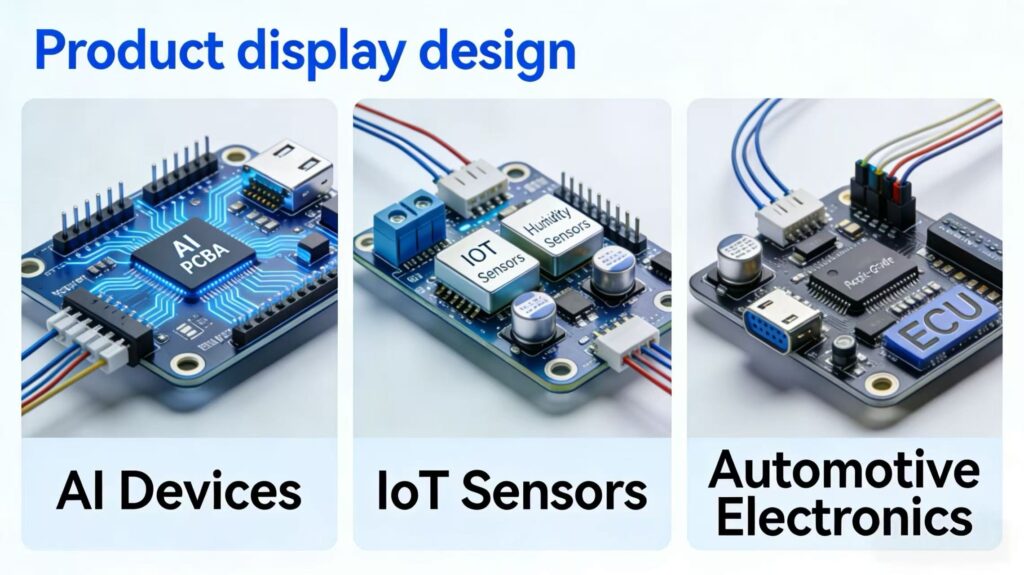
Custom PCB assembly is widely used across multiple industries.
Major applications include:
AI Smart Devices
AI hardware such as smart cameras, smart speakers, and intelligent assistants rely on high-performance PCBAs.
IoT Devices
IoT products require compact PCB designs and ultra-low power consumption.
Examples include:
- Smart sensors
- Asset trackers
- Smart meters
Medical Electronics
Medical devices require extremely reliable PCBA solutions.
Typical products include:
- Patient monitoring systems
- Diagnostic equipment
- Wearable medical devices
Automotive Electronics
Automotive systems rely on robust PCBA solutions for safety and performance.
Applications include:
- ADAS systems
- vehicle control modules
- infotainment systems
Smart Home Products
Smart home electronics are one of the fastest-growing PCBA markets.
Examples include:
- Smart thermostats
- security cameras
- voice control hubs
- home automation controllers
Why Choose YUXUN for Custom PCBA Services
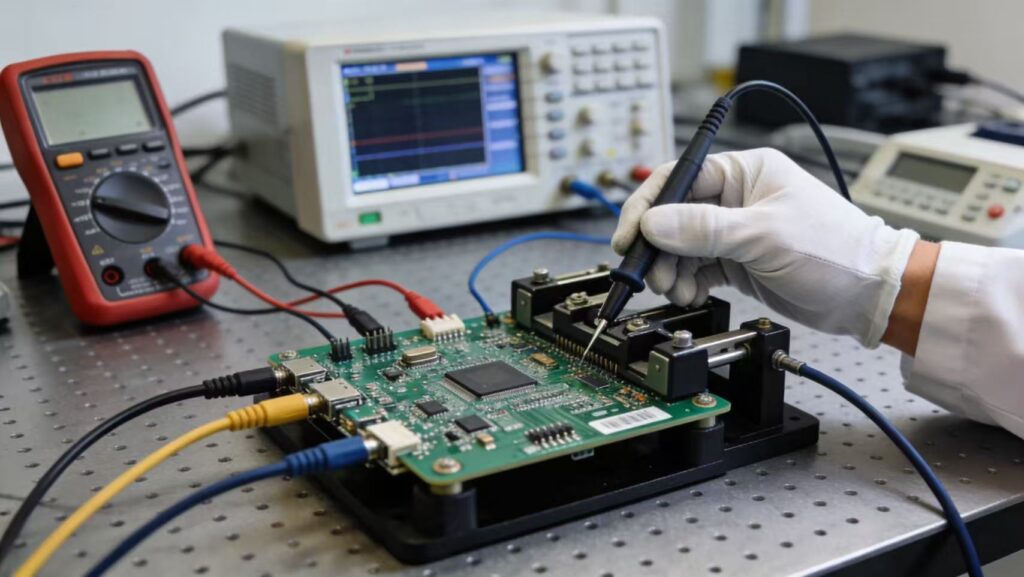
Choosing the right manufacturing partner is critical for product success.
Key strengths include:
Strong R&D Capability
YUXUN’s engineering team supports:
- PCB design
- circuit optimization
- prototype development
- firmware integration
Advanced Manufacturing Equipment
The factory is equipped with:
- high-speed SMT lines
- automated inspection systems
- precision testing equipment
This ensures consistent production quality.
Flexible Production Capacity
YUXUN supports:
- rapid PCBA prototyping
- small batch production
- large-scale mass manufacturing
One-Stop Electronics Manufacturing
Customers benefit from a complete PCBA solution, including:
- PCB design
- component sourcing
- PCB assembly
- testing
- final product integration
This reduces development time and simplifies supply chain management.
Conclusion
PCBA Custom plays a vital role in modern electronics manufacturing.
Through customized circuit design, professional component sourcing, precision assembly, and strict quality control, manufacturers can build reliable and high-performance electronic systems tailored to specific product needs.
As technologies such as AI, IoT, smart home, and automotive electronics continue to grow, demand for custom PCB assembly services will increase rapidly.
Working with an experienced PCBA manufacturer like YUXUN helps companies accelerate product development, reduce manufacturing risks, and successfully bring innovative electronics to market.
FAQ: PCBA Custom
What is the difference between PCB and PCBA?
PCB refers to the bare printed circuit board, while PCBA refers to the fully assembled circuit board with electronic components installed.
How much does custom PCBA cost?
The cost of PCBA customization depends on several factors:
- PCB layer count
- component cost
- assembly complexity
- production volume
- testing requirements
Large production volumes typically reduce the cost per unit.
How long does custom PCB assembly take?
Typical lead times include:
- PCB design: 3–7 days
- PCB fabrication: 5–10 days
- assembly and testing: 3–7 days
Prototype projects usually take 2–3 weeks.
What industries use custom PCBA services?
Custom PCBA solutions are widely used in:
- consumer electronics
- IoT devices
- automotive electronics
- medical equipment
- industrial automation
- telecommunications