In the fast-paced world of electronics, PCBA (Printed Circuit Board Assembly) plays a crucial role in ensuring the functionality and reliability of devices. From smartphones and medical devices to industrial machines, PCBA is the heart of modern electronics. This guide offers a comprehensive understanding of PCBA, breaking down its definition, manufacturing process, types, and real-world applications. Whether you are an engineer, a tech enthusiast, or a business looking to understand the fundamentals of PCBA, this article will provide valuable insights.
Why is PCBA Important in Modern Electronics?
The increasing complexity of electronic devices demands more advanced and reliable solutions for circuit boards. PCBA allows for compact, efficient, and durable connections between the various components that make up a device. Whether it’s your mobile phone or a life-saving medical device, without PCBA, these devices wouldn’t function as effectively. For businesses and engineers, understanding PCBA is essential for making informed design, manufacturing, and sourcing decisions.
What Is PCBA?
Definition of PCBA
PCBA stands for Printed Circuit Board Assembly, which is the process of mounting electronic components onto a PCB (Printed Circuit Board). The board provides a physical base where these components are attached, creating a functioning circuit. This assembly can be done using various techniques, such as Surface Mount Technology (SMT) and Through-Hole Technology (THT).
PCB vs. PCBA: What’s the Difference?
- PCB (Printed Circuit Board): A PCB is essentially a bare board made of conductive material (usually copper) that allows electrical connections between components. It only functions as a platform for circuit connections.
- PCBA (Printed Circuit Board Assembly): Once components such as resistors, capacitors, and ICs are attached to a PCB, it becomes a PCBA. At this stage, it can perform its intended electronic functions.
Common Terms You Should Know
- SMT (Surface Mount Technology): A method where components are mounted directly onto the surface of a PCB.
- THT (Through-Hole Technology): A method where components have leads that go through holes in the PCB and are soldered on the other side.
The Manufacturing Process of PCBA
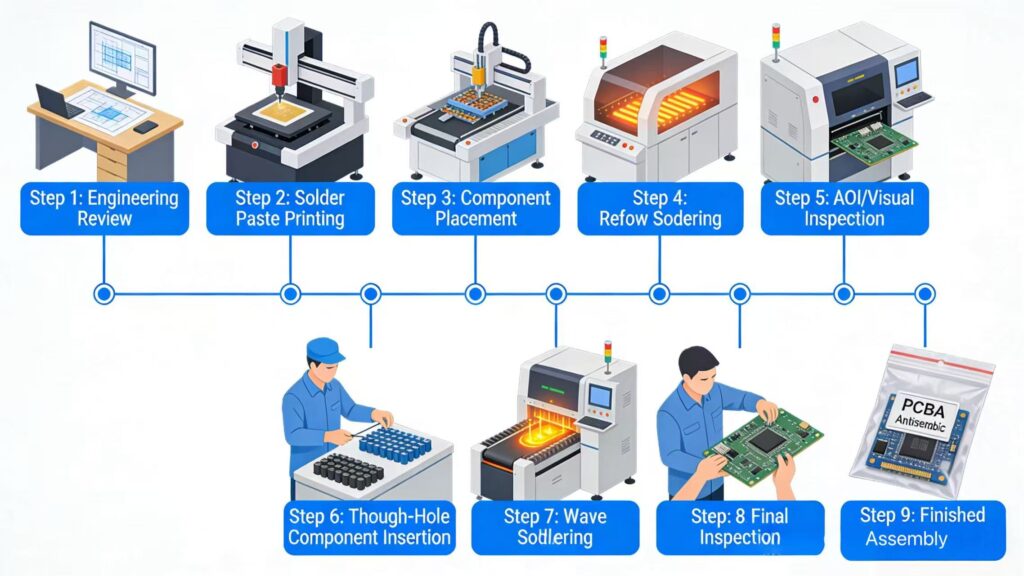
The PCBA manufacturing process is intricate and consists of several critical stages that require precision and quality control. Below is an in-depth look at the PCBA assembly process:
1. Designing the PCB Layout
The first step involves designing the PCB layout using CAD software. This step defines the positioning of the electronic components, wiring paths, and component footprints. The designers need to ensure that the layout is optimized for electrical efficiency and signal integrity.
2. PCB Fabrication
Once the design is finalized, it’s time for the PCB fabrication process. This involves:
- Etching copper on a non-conductive substrate to form conductive pathways.
- Drilling holes for components that need to be inserted through the board (for THT).
- Solder masking and silkscreening are added to protect the PCB and label components.
3. Applying Solder Paste
After the PCB is fabricated, solder paste is applied to the areas where components will be mounted. The paste acts as a temporary adhesive for the components and helps form the necessary electrical connections when soldered.
4. Placing the Components
Automated pick-and-place machines accurately place each electronic component onto the PCB. For SMT, tiny components are precisely positioned using machines, while for THT, leads are passed through holes in the PCB.
5. Soldering the Components
Next, the soldering process takes place, either through reflow soldering (for SMT) or wave soldering (for THT). This step involves heating the solder paste to melt it, forming permanent electrical connections between components and the PCB.
6. Inspection and Testing
Once the components are soldered, the PCBA undergoes various testing methods to ensure quality:
- Automatic Optical Inspection (AOI): Checks for defects like misalignment, missing components, or poor solder joints.
- Functional Testing: Verifies that the PCBA performs its intended functions.
- X-ray Inspection: Used for inspecting complex assemblies or multi-layered boards.
7. Final Assembly
After successful testing, the PCBA is ready for integration into the final product. This could include additional packaging, connection to other parts, or functional verification.
Types of PCBAs
There are several types of PCBA, each suitable for different applications depending on the complexity and functionality required.
1. Single-Sided PCBA
Components are mounted on just one side of the PCB. Single-sided PCBAs are used for simpler products with low complexity, such as household appliances and basic electronic gadgets.
2. Double-Sided PCBA
Double-sided PCBAs allow components to be placed on both sides of the PCB, making them more compact. This type of assembly is typically used in mid-range electronic products like printers, home appliances, and automotive electronics.
3. Multi-Layered PCBA
In multi-layered PCBAs, multiple layers of conductive material are stacked and connected to form more complex circuits. These are used in high-performance electronics such as smartphones, computers, and medical devices.
Applications of PCBA
1. Consumer Electronics
Smartphones, tablets, and laptops rely on PCBA for their core functionalities. As consumer electronics evolve, PCBA enables the integration of smaller and more powerful components, making devices more compact and efficient.
2. Automotive Industry
PCBA is used in advanced automotive systems like infotainment, navigation, and safety features (e.g., airbags, ABS systems). As vehicles become smarter, PCBA enables enhanced connectivity and performance.
3. Medical Devices
From patient monitoring systems to diagnostic tools, PCBA is essential for medical devices. High-reliability standards ensure that PCBAs meet stringent regulatory requirements in the medical industry.
4. Telecommunications
Telecommunication devices such as routers, cell towers, and wireless communication systems rely on PCBA for high-speed data transmission and connectivity.
5. Industrial Equipment
In the industrial sector, PCBA is used in automation systems, control panels, and machinery for manufacturing and process control, ensuring accurate operations and monitoring.
Conclusion
In conclusion, PCBA is at the heart of all modern electronics, enabling functionality in everything from consumer gadgets to industrial equipment. Understanding PCBA is critical for manufacturers and engineers to ensure that their products are reliable, efficient, and high-quality. The demand for advanced PCBAs will continue to grow as industries move toward more integrated, compact, and functional devices.
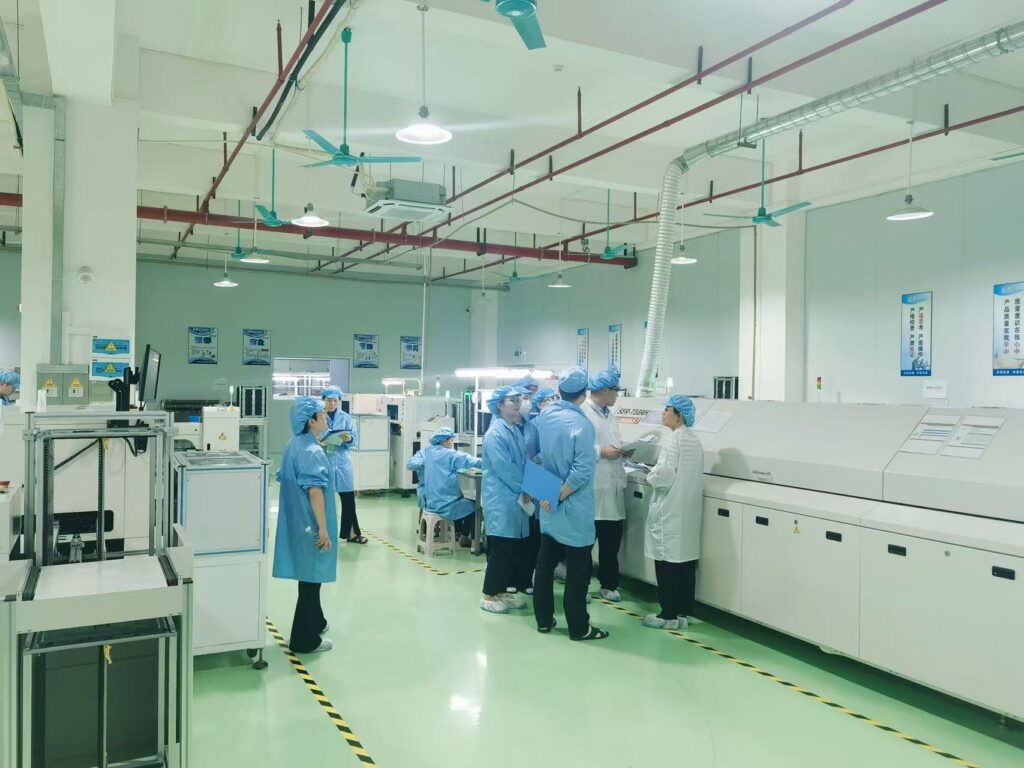
At Yuxun, we specialize in providing high-quality custom PCBA solutions, ensuring that our clients’ products meet the highest standards of performance and reliability. Whether you are looking for SMT or THT solutions, our experienced team is here to assist you in every step of the PCBA manufacturing process.
FAQ
1. What is the difference between PCB and PCBA?
PCB is the bare board without components, while PCBA refers to the PCB after components are mounted.
2. Why is PCBA important in electronics?
PCBA ensures electrical connections and functionality in electronic devices, enabling them to perform complex tasks.
3. How is PCBA tested for quality?
PCBAs undergo AOI, X-ray inspection, and functional testing to ensure proper operation and reliability.
4. What industries use PCBA?
PCBA is used in industries such as consumer electronics, automotive, medical devices, telecommunications, and industrial machinery.
5. How does PCBA impact the design of a product?
PCBA enables the integration of electrical components into compact designs, improving the performance and functionality of products.